


We finished up our main CSA season with a great group of apprentices. We tackled a number of jobs during the apprentices’ last week to complete the season. The garlic for 2012 was planted with our Suffolk horses, the potting soil for winter started transplants mixed up and stored away, the corn ground and this year’s garlic ground was worked up and seeded to rye. We also managed to work on the foundation for the greenhouse. Our garden area for next year was worked up and seeded down to rye and oats using our draft horses and the grain is coming up nicely.

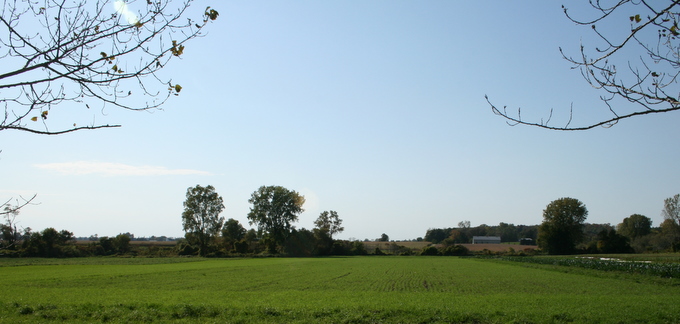


Well, our season seems to be rapidly drawing to a close! Overall it has turned out to be a wonderful year for many of the crops that we grow. I’m thinking back especially to strawberries and melons, as well as bumper yields of tomatoes, eggplant, peppers and fall raspberries. We grew the CSA to just over 200 shares this season. It feels like a manageable size and are happy to not get any bigger. Our apprentices and working shares have been wonderful in helping us harvest the bounty of produce that has come forth during the season. The response to our fall CSA has been very positive and we are looking forward to the challenge of extending our season to the beginning of December for a smaller group of CSA members on a bi-weekly basis – only on Saturday. The reason that we have been increasing our CSA and have expanded into the fall has been to generate more income to purchase additional land, which we have been renting from my mother. This has been made possible by the support of my mother and siblings, who want the land to stay in the family and be owned by the farmers who farm it and by all of our CSA members who have given us an income to afford to purchase the land. I was very close to my grandmother and father, who loved this farm and used teams of horses to farm it. It is with a keen sense of stewardship and responsibility that we take on the care of the land which we love and into which my roots run deep.

We have finally had time to start on the greenhouse construction again. The walls for the foundation are made out of dry laid cement block. They will have cement poured into the core and be plastered on the outsides for reinforcement. It is a building method Ken has read about and is interested to try. It ends up being like a poured cement wall, but doesn’t require cement forms. The basement of the north room will be filled with rocks to act as a heat sink for the heat that is generated when the sun shines.

Our green house construction is currently on hold for black walnut tree cutting. We have lost three horses to colic within the last year and Ken has been mulling it over in his brain and trying to sort out why. The end result is a strong suspicion that it is black walnut that is the culprit. As I write, he is cutting down the trees along the south edge of the winter paddock area. There are different symptoms of poisoning from juglone, which is in the black walnut bark, leaves, nuts and pollen. They include skin irritation, hair loss, colic, respiratory problems all of which we have seen to greater or lesser extent in our horses. The problem is that laminitis is one the main symptoms often sited and we didn’t really see that, so it threw us off. Apparently, horses that are exposed for years can sometimes develop a problem all of a sudden. It seems crazy. We have lots of walnuts bordering our pasture fields. I expect this winter we will be cutting a lot of walnut trees! Some of them are on the fence row with our neighbors, so we will have to speak to them and apply for permits to cut trees as well. Ken is now wondering if Jethro’s dropped soles, our first stallion, were related to walnuts – not over feeding… He is a disappointed with our vets, because in all the years they have been coming here they haven’t pointed out any potential problem. Sam had severe skin irritation this spring. He also grabbed a branch of walnut as he was walking by a tree when we were digging potatoes. I ripped the branch out of his mouth in the morning and that evening he had a gas attack. He recovered that time, but not the next time two weeks later. Chester was in fields near the house with walnuts in both… His condition deteriorated for unknown reasons. When he really got sick we had just put him out in the area to the south of the quonset and thinking back it was probably walnut pollen time and there are a lot of walnuts in the trees right there… apparently even small amounts of pollen can sometimes cause big reactions. Both Gena and Gewn have suffered from strange unexplained respiratory problems. If it is the problem and we can remove black walnut from the pastures and paddock areas we hope to see a positive jump in overall herd health. Here’s hoping.
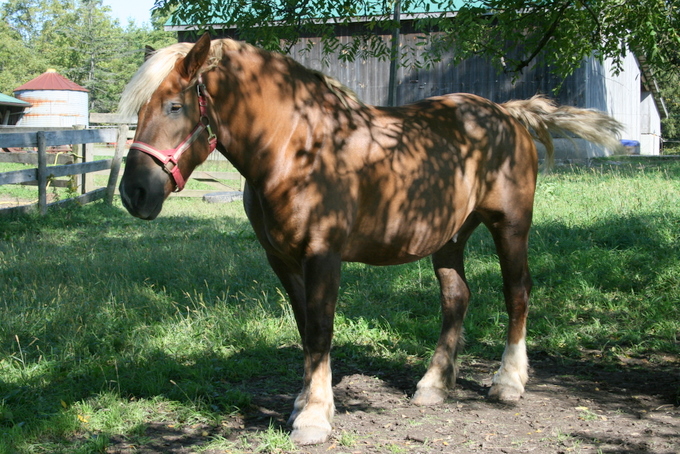
We have a new replacement nine year old gelding. “Mater” has been retired from the horse pulling circuit. We suspect that he has some Suffolk blood although he isn’t registered. He probably came east as a young foal from one of the PMU farms in western Canada where they had some Suffolk horses.

The cool nights and the end of melons and sweetcorn–produce which particularly earmarks the height of summer–has reminded me that the advent of autumn is nearly upon us. In many ways this is my favorite time of year, when the mornings are cold enough to keep a hoodie on, and the heat of the day feels pleasant rather than overwhelming. The bounty of crops continues. Our melon season ends, and we are grateful for all of those stifling hot summer days which allowed for the abundance of ripe and sweet melons. After our last sweet corn harvest on Tuesday morning, we took down the raccoon fence which had so carefully protected our crop, and Ken bushhogged the tall and empty stalks. We now have fall bearing raspberries to enjoy, which are producing enough to be open for pick-your-own on Tuesdays and Saturdays from 11-7, during CSA pick-up hours only, please. The bright red and green zebra tomatoes in the hoophouse continue to grow and ripen, and the paste, heirloom, and sun-gold cherry tomatoes of the field each have a unique sweetness and flavor–as long as we can harvest them before the multifarious pests who also want their share. We hope you are enjoying making up your own boxes of tomatoes so that you can sample the many varieties our fields have to offer. Other delicacies of fall–winter squash, leeks, and potatoes–will soon be coming.

A few days of warm and dry weather allowed for us to bring in the last of the second-cut hay early this week. The barn is full almost to the ceiling, and we feel confident that the horses will have enough feed to last through the winter. Getting in the last of the hay and catching up on work in the garden now allows us enough extra time to begin construction on the new greenhouse. Today is the third day in a row where the OHF crew has been faithfully and mostly-joyfully sifting through the pile of dirty rocks to wash off pebbles and mud. We need enough rocks to fill in the space below the floor of the greenhouse 3-feet high. The rocks will provide mass to store heat, however we need them to be clean to allow for air to circulate between and around rocks. Dance music and stimulating conversation has helped us to keep our energy high during this somewhat arduous task. Plus, we are all thrilled to be able to be a part of this building project–both to learn about greenhouse design and to help Ken and Martha complete construction before the cold of winter hits.
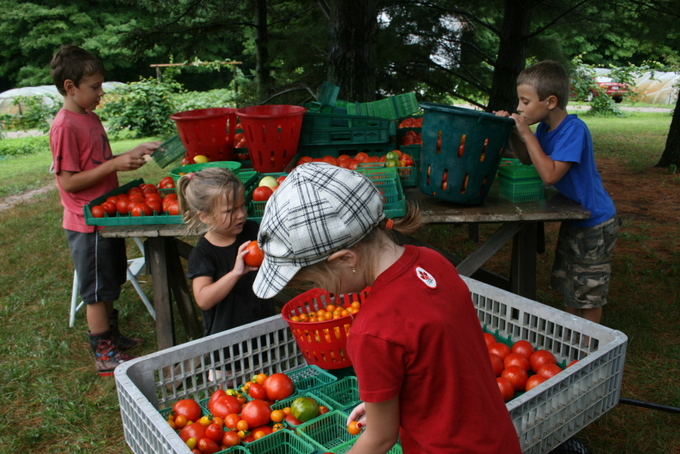
Please note that the last CSA pick-up days for the season are Tuesday October 4th, and Saturday, October 8th. If you are a working share and have not yet participated in your 5-hours of work for the season, please sign-up on the calendar in the pick-up room. We have many slots open and always look forward to your help harvesting and washing vegetables.
All season I have asked for recipes and they are now rolling in. Here are two more recipes contributed by CSA members.
Hi Martha,
Today’s pick-up had all the ingredients for one of my favourite salads ever, so I thought I would share the recipe. Bread salad may sound strange but it is so good!
Panzanella
1 baguette, a dense artisan style loaf works best
1/2 cup olive oil
3 Tablespoons red wine vinegar
1 tsp sugar
salt and pepper to taste
1 onion, thinly sliced
1 cucumber, peeled, halved (seeded if necessary) and cut into bite sized pieces.
3 cups tomato, chopped
1/4 cup fresh basil leaves, chopped.
Whisk oil, vinegar, sugar salt and pepper together in a large salad bowl.
Add onion to dressing and let sit while you prepare the rest of the salad. … it softens the bite of onion and adds a nice taste to the dressing.
Slice baguette lengthwise into quarters (you should have 4 long pieces), brush with oil an grill until toasted on all sides. Remove, cool, cut into bite-sized chunks.
Add tomato, cucumber, basil and bread. Toss and serve.
* We usually serve with grilled boneless skinless chicken breast that have marinated for about 2 hours in …. 1/4 cup olive oil, 1/4 white wine, 2 Tbsp each fresh rosemary and thyme, 1 minced clove of garlic, 2 tsp mustard, 2 tsp sugar.
Cheers,
Sheena
Hi Ken and Martha;
1 cup unsalted cashews, soaked for at least 1 hour
1 lemon, juiced
1 tbsp olive oil
1 tbsp soy sauce
2 cloves garlic
1 tbsp nutritional yeast
1/2 tsp sea salt or to taste.
Blend until consistency of yogourt. Massage onto kale leaves. It should be covered like a light salad dressing. Bake at 175 degrees for approx 3 hours, until crispy.
When cool, keep in an airtight container for up to a few days.
The paste recipe is easily doubled, and can keep in the fridge for a few days. It also freezes well. It is a great idea to double the batch and freeze the leftovers so that the next time you have kale, you have the paste easily available – just defrost and spread. 🙂
Give it a try! I will attempt to bring some for you next time I come down to the farm (in a few weeks).
Cheers,
Brianne Curry
We have received two recipes from CSA members to be shared. The first is from Vicci Coughlin:
Hi Martha:
BBQ Corn with Herb Butter
Serves 4-6
1/3 cup Orchard Hill Farm fresh basil, rosemary, chives & oregano, chop finely
1/2 cup unsalted butter at room temperature
1/2 teaspoon himalayan salt or table salt
8 ears of Orchard Hill Farm fresh corn on the cob
– Mix the herbs, butter & salt by hand or in a food processor
– Take the ears of corn, remove a couple outside layers of husks on each cob, fold back the remaining husks and remove the corn silk
– Spread the butter mixture over the corn kernels and rewrap the husks around the cob
– To BBQ – put on med heat, grill till husks are a bit charred and the kernels are tender, turn often for about 15-20 min

The summer is flying by! We are grateful for the rain last night – it will save us another round of irrigation. The hot weather is bringing on our heat loving crops like eggplant, tomatoes and sweet corn. Unfortunately, the raccoons have been making a mess in the corn patch, despite the electric fence barrier. Ken put up our heavy duty fencer last night and we hope that will discourage them! We harvested our garlic this week and it is hanging up to cure. Yesterday Ken took off our early planted oats – the horses will be happy about that throughout the year. Our two foals Eli and Wendell are doing well. Their mothers went back to work this week so that we could have two teams of three horses working to plow the 2012 garden area. Lisa was employed foal sitting in a little improvised outdoor stall – the ‘playpen’ – near the field so the mothers could nurse the foals without having to come all the way up to the barn. It would take a full time photographer to keep up with all the photographs we could take every day. Let alone getting it together to share them with everyone! We’re a small farm, but a busy one that feeds many.

We continue to appreciate the efforts of our apprentices. Ryan Brennen has finished his sojourn here at Orchard Hill and Tara Smedbol will be joining us later this week for the remainder of the season. We have just had a visit from Ava Richardson, who was an apprentice here in 2003. She was visiting with her husband from Japan. Ava has been working in Japan teaching for the past three years and is hoping to return to Canada with her husband and take up farming again. We received a letter this week from Anna McFaul, who was an apprentice here in 2008 and 2009. Anna is travelling for a year and is in New Zealand enjoying all the fruit that they grow there. We regularly receive emails from past apprentices who are fondly remembering their time here, a high number of whom are now farming themselves. It’s curious to have so many fledglings fly out of our ‘nest’ here on the farm. When we see them years later, I want to know if they’re eating properly, looking healthy, found a good mate…we have a vibrant family of past apprentices.
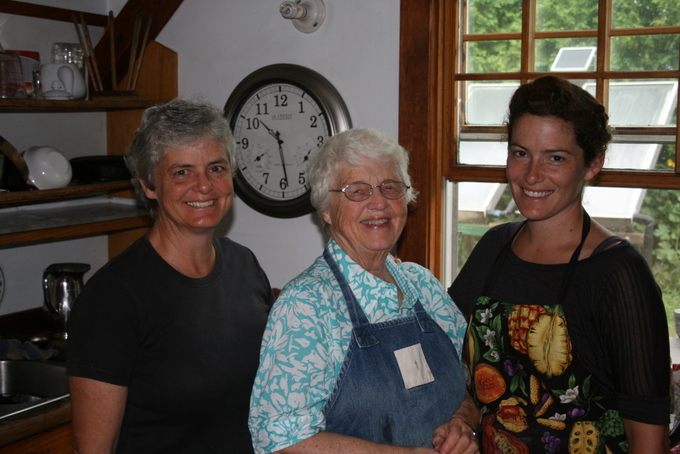
Our daughter, Ellen, is visiting from Portland, Oregon until the end of August and we are extremely happy to have her home for a longer visit than usual. Her husband will be joining her for a week on Saturday. They are thinking of possibly moving to Ontario next year. Ellen has been busy in the kitchen doing preserving and helping to feed the crowd that gathers around our table for meals. It’s also great to have her experienced hand in the field…she and I started the CSA on our farm in 1997 to help fund her university education!
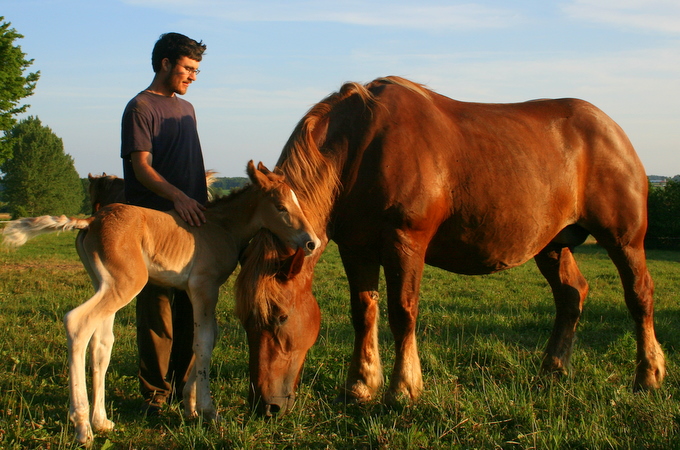
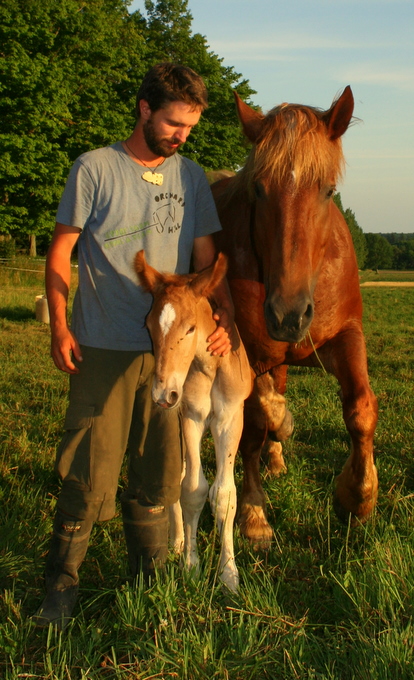
Gwen had her Suffolk Punch foal ready to greet us on Tuesday morning! A beautiful stud colt with a white diamond on his forehead. Ryan will be leaving our farm this week and was hoping the foal would be born before he departed. Ryan is off to start medical school and has enjoyed being part of our farm team getting in on the ground level of good health which begins with healthy food produced in a sustainable manor. We wish him well and although we will miss him we are sure that he will be an excellent doctor.
The heat and dry weather have been a challenge and we are irrigating the main garden for the second time this week. It is interesting how things balance out. Ken says that the average rain fall over the year remains fairly constant so that when we have a very wet spring we are likely to have a dry spell in the summer to balance it out…We hope it doesn’t last too long, but are glad that we have the ability to irrigate the garden.
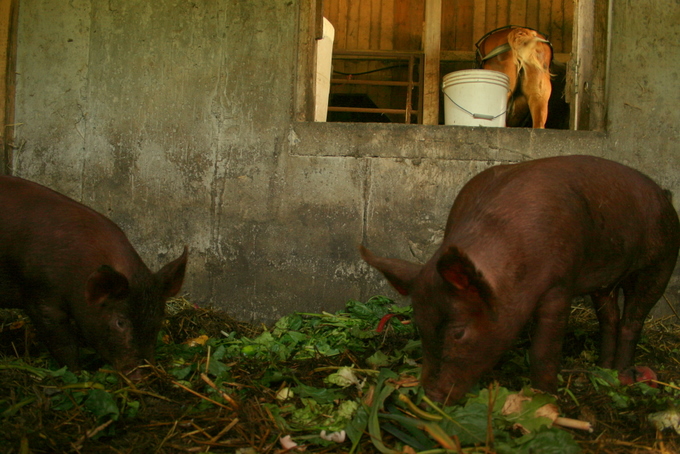
We have new Tamworth pigs to help jump start the composting of the horse manure. They also enjoy the extra produce on CSA pick up days.

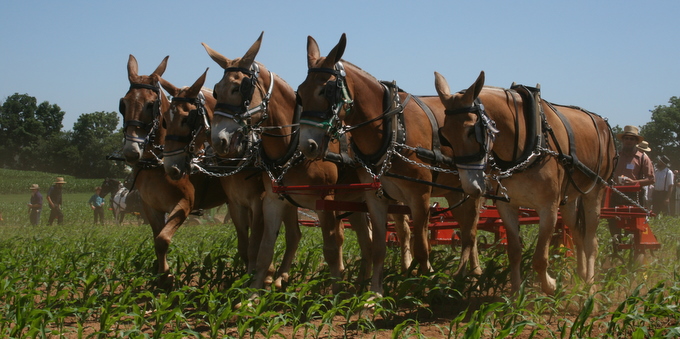
Ken and Andy took a bit of a holiday and went to Horse Progress Days in Pennsylvania at the beginning of the month. The Mules caught their eye. Many of the Amish use mules further south because they do better in the heat. However Ken isn’t ready to switch to mule power yet! Gena’s Suffolk foal has been named “Eli” and he continues to grow well.
It always seems like the garden is really producing when we have our first zucchini and broccoli and they have started. We have said good-bye to the peas and strawberries and the string beans are about to begin.

Our working shares continue to give us a boost with the garden harvest and washing of vegetables. It’s a great way to get to know new members and renew our connection with old members. Children benefit from being part of the work that goes into the produce they take home each week and it helps them realize where the food they eat really originates! We believe it adds to the richness of their CSA experience.
We have lots of Swiss Chard that we will be putting in our CSA “Extras” each week. In the winter I visited our daughter, Ellen, in Portland, Oregon. She was graduating from a Chef’s Studio course taught by Robert Reynolds. Robert gave me a book he wrote inspired by recipes of his French friend and mentor, Josephine Araldo. From a Breton Garden by Josephine Araldo and Robert Reynolds has lots of recipes for vegetables that Josephine’s grandmother used and we grow. I thought that it would be good to share some of the recipes with the CSA and I am finally getting around to it! (We must be caught up in the garden!) They use both parts of the chard like it is two different vegetables. My mother did the same thing when I was growing up.
CREAMED SWISS CHARD WITH CHEESE
Swiss Chard and cream is a combination that allows for limitless possibilities; the cream could be replaced by walnuts, quatre epies, or whole grains of mustard. The vegetable can always accompany a roast duck and sauteed potatoes, and a wine such as Cahors or Madiran.
INGREDIENTS
2 bunches Swiss Chard
1 to 2 tablespoons butter
1 medium onion
1/2 cup bechamel (white sauce made with 1 tablespoon of butter and 1 tablespoon flour cooked together over low heat for 3 to 4 minutes and then 1/2 cup milk added and stirred until it is thick, cook over very low heat for several minutes).
1/3 cup grated cheese
1 egg
1/3 cup cream
Salt, freshly ground pepper, and nutmeg
METHOD
Prepare the chard by removing the center stalks. Reserve for another use. Blanch the green in boiling salted water until limp. The cooking time depends on the tenderness of the greens. If they are young plants, cook only a minute or two; if they are older and more fibrous, they may require more time to blanch. When they are done, remove to a colander and flush them under cold water to stop their cooking. Remove to a cutting board and chop coursely. In a dry skillet, dry saute until the leaves render their water, set aside.
In the same skillet, melt 1 to 2 tablespoons butter and saute the onion for a minute or two. Add the chard, which should be well drained. Stir in the bechamel and cheese; toss well to coat with the sauce. Season with salt, pepper, and nutmeg to taste.
Combine the egg and cream and stir into the chard mixture. Once the egg is added, do not cook. It can be warmed, but if subjected to too much heat, the eggs will hard cook. Adjust the seasonings and serve hot.
Note: The recipe calls for both bechamel and an egg and cream liaison. One or the other can be used alone, or both can be replaced by heavy cream reduced until it coats a spoon.
An alternative to cream or bechamel is a flavorful oil, such as extra virgin olive oil, walnut oil,hazelnut oil, or colza oil.
SWISS CHARD GRATIN
This gratin goes well with a roast of pork accompanied by sauteed apples and a white wine from Savoie, an Apremont or a Crepy.
INGREDIENTS Serves 4 to 6
1 or 2 bunches Swiss chard with ribs
1 cup white sauce ( see recipe below)
1/4 cup grated Gruyere cheese
4 tablespoons melted butter
Salt and freshly ground pepper
METHOD
Preheat oven to 400 degrees. Remove the Swiss chard stems from the greens and save the greens for another use. Remove the tough outer fiber of the stalks by slipping a knife under the cut end of the stalk and peeling it away. Cut the stalks into 1/2 -inch pieces on the diagonal. Blanch the stalks in boiling salted water until done, about 4 to 6 minutes. Darin in a non-aluminum colander and flush in cold water. The vegetable water from cooking can be saved and used for a flovorful stack.
In a bowl, season the chard stalks with salt and pepper, and then mix with the white sauce; set in an oven-proof casserole. Sprinkle the surface with cheese. Dribble the melted butter over the top and brown the gratin in a preheated oven. The gratin can also be place under the broiler provided the mixture has been warmed before being put into the gratin dish.
WHITE SAUCE
INGREDIENTS
3 tablespoons butter
3 tablespoons flour
1 cup hot milk
1/2 cup heavy cream
Salt and freshly ground pepper
METHOD
Melt the butter in a small saucepan. Whisk in the flour and allow to cook for 3 to 4 minutes. Slowly whisk in the hot milk and then the heavy cream. Season with salt and pepper. Allow the sauce to simmer (over a very low heat) 20 minutes; reserve and keep warm.

Gena had a beautiful Suffolk Punch stud colt on Monday morning. We are all enjoying having a foal around again after a break of a few years. He seems healthy and strong. In the picture he is less than a day old and already “up and at ’em”!
We have had a bumper crop of strawberries. The CSA members have enjoyed picking extra berries on pick-up days. We dug our first carrots today and hope to have broccoli soon. It is nice to have the garden growing well and savor the flavours of the season as they change.
Last week we did manage to get the footings poured for the new greenhouse thanks to the efforts of the apprentices and our son, Grayden, and his friend, Race, who came for the week to jump start the project. Now even if we don’t have time to work on it again until fall the frost sensitive work is done!
