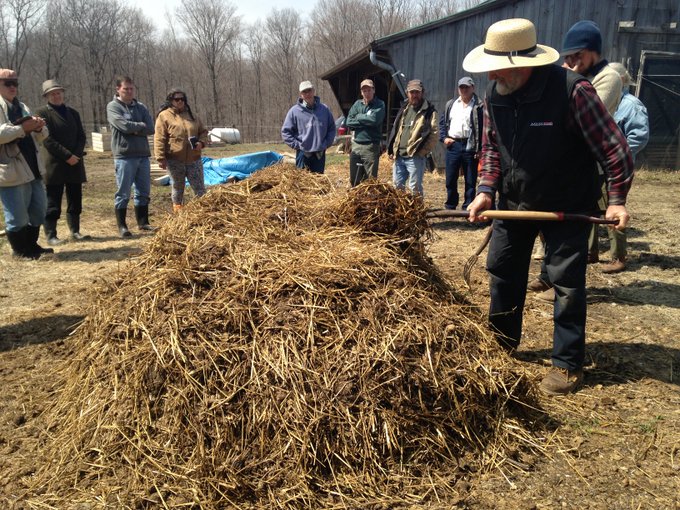
Composting Workshop Photo Credit: Emily Hansen/EFO
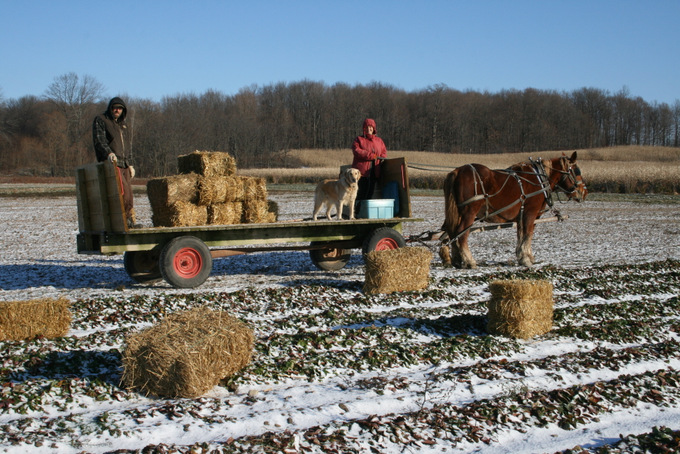
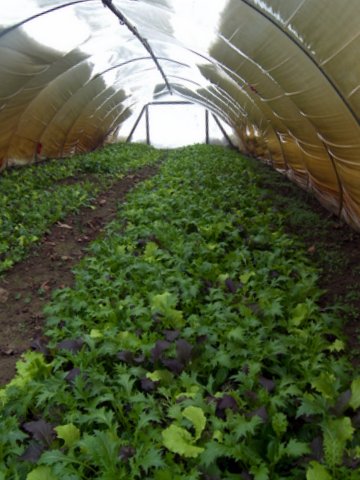
What a backward spring! We are all ready to go, waiting for the weather to warm up to let us out on the land! Ken and the apprentices have drug out and serviced our equipment. Earlier in the week Ken was able to do a bit of “snow ploughing” with our Suffolk horses in the field, because the ground was thawed under the snow, but this morning the snow is gone and the ground is frozen again! I feel like we are horses chomping at the bit waiting to get on the land! However, we are getting a lot of odd jobs done and it is important to have things in place so that when the window does open we are ready to take off running. Hopefully, we will be able to do some more ploughing this afternoon. Four of our five hoop houses are up and planted we have one more ready for its new plastic and then we will plant it. Once things warm up the everything should come along quickly.
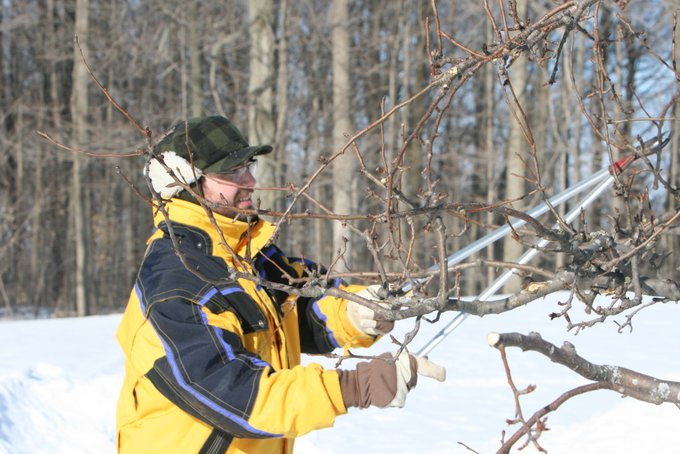
Last Saturday we hosted an Ecological Farmers of Ontario composting workshop. Ken taught the course and we have some pictures courtesy of EFO staff member, Emily Hansen.
CSA Flowers Photo Credit:Chantelle Diachina / CSA Member
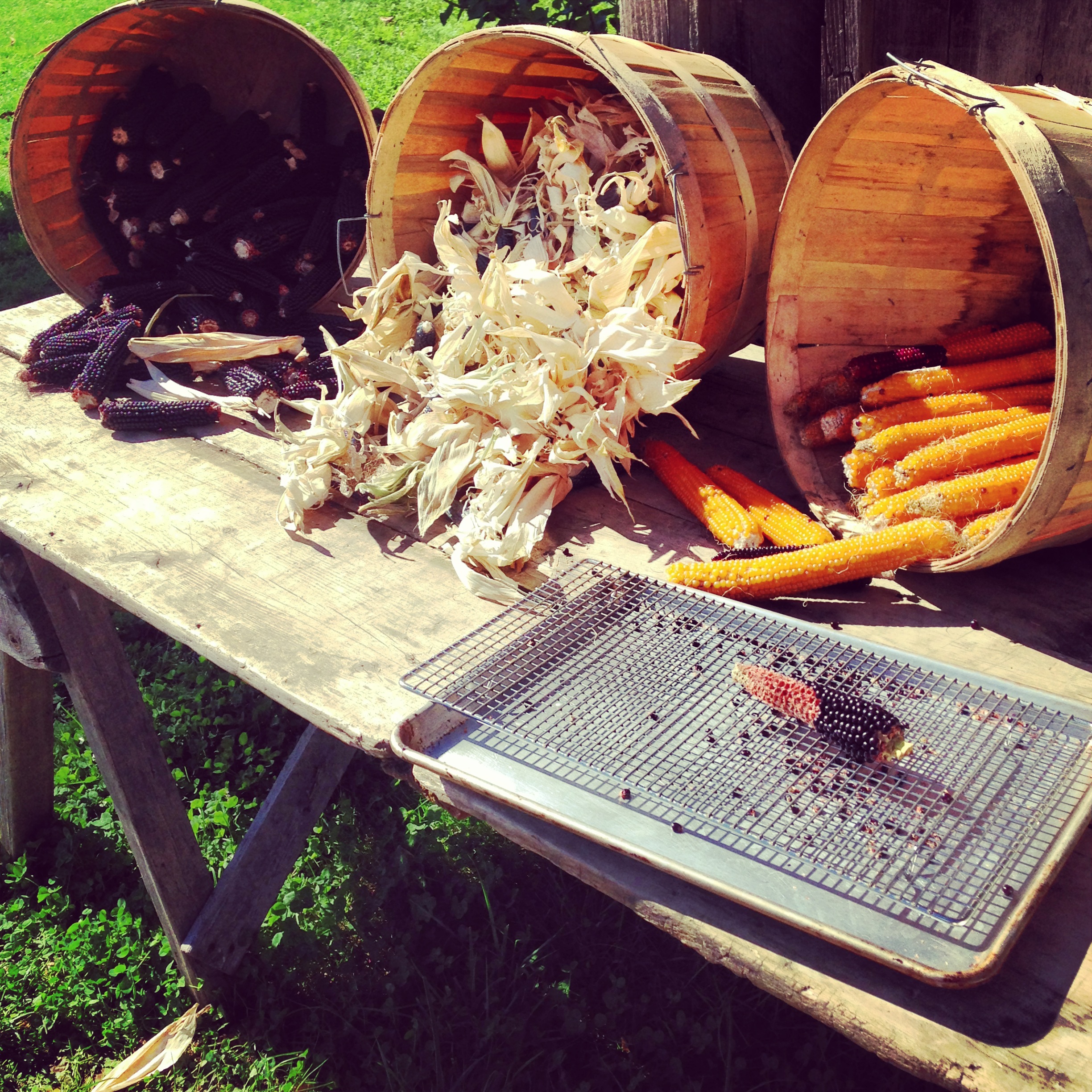
CSA member Chantelle Diachina sent some pictures along that she took during the CSA season last year. It’s nice to see the beautiful flowers, herbs and aray of popcorn in her pictures from the 2013 CSA season. It gives me confidence that warm weather will come and we will again have a bountiful harvest to share with our CSA members. We still have some shares available for the 2014 season. Selection of Herbs from our Gardens Photo Credit: Chantelle Diachina / CSA Member
OHF Popcorn Photo Credit: Chantelle DiachinaCSA Fall Carrots and Golden Beets Photo Credit: Chantelle Diachina
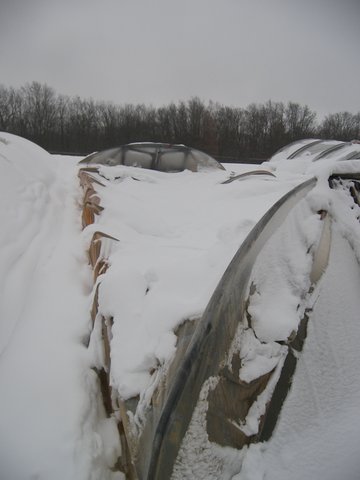
We put the first plants into the ground in one of our hoop houses last Saturday! Since then we have been doing some more seeding and transplanting in the greenhouse and have been trying hard to get the other hoop houses ready for planting. The big snow dump at the end of November last year ruined about 150 feet of hoop house- bending the hoops and tearing the plastic. It has been a major job to take apart the old hoop houses, clean up the plants and trellis that were inside, and salvage what hoops and plastic we could to rebuild one 50 footer. We have purchased a new 100 foot hoop house to take the place of the one big one. We are getting closer, but the strong winds today mean that it is not the day to cover a hoop house with plastic!
Suffolk Horses on the Treadmill
The Suffolk horses are becoming accustomed to jumping up on the treadmill and Ken milled some more flour, with their help, last Saturday. Our small mill is slow and we are wondering if we should buy another small mill and run two at once or purchase a larger mill. We’ll see.
Laying Hen Enjoying Scratching Around
Our chickens are starting to lay more eggs as they gear up after a winter “off” getting ready for the CSA season. We have ordered some young ready-to-lay pullets for the middle of May to replace some of our older hens. They are really enjoying scratching around since the snow has disappeared. We will have some extra eggs for sale at the farm before the CSA season begins for anyone who wants to come out for some real free range eggs!
As the snow disappears we are getting ready to work land and hope to have some seeds in the ground next week. Ken is happy that the horses are in good shape to start the spring work because of all the logging and treadmill work they have done already.
Our CSA membership is gradually filling up, but we still have some shares available for the 2014 season and welcome new members.
“Digging in soil can actually act as an antidepressant, as a strain of bacterium in soil, Mycobacterium vaccae, triggers the release of seratonin, which in turn elevates mood and decreases anxiety.” I have always believed that getting my hands in the earth was good for my soul, so reading the above quote intrigued me. It is from 10 Ways to ShowLove to Someone with Depression from Health Counselling Services of Simon Fraser University. Spending much of my March “farm time” in the greenhouse with the extra light, green plants sprouting and hands in the soil has been good. With this warm weather we will soon be able to get the early hoop houses planted and perhaps some outdoor seeding, that we tuck in with row cover.
Brandon WickesCaitlin Arnold
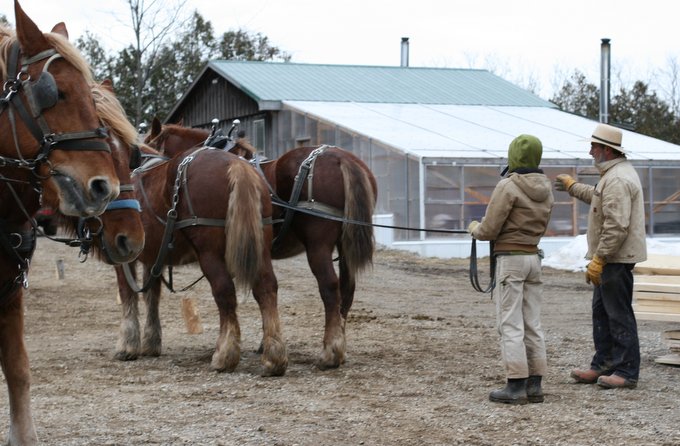
We are very happy that our intern/apprentices from the U.S. arrived a week ago. We are enjoying their beautiful smiles, positive energy and enthusiasm for farming with draft horses. After a week of introductions to various aspects of the farm and lots of firewood cutting and splitting they are now taking a Draft Horse Workshop. Our Suffolk Punch horses are patient teachers along with Ken and Grayden. The field work portion of the workshop will have to wait until the ground thaws out! We have a workshop scheduled for April 24-26 where outside participants will come to the farm for a three day Draft Horse Workshop. This is a good trial run for Ken and Grayden.
CSA memberships are rolling in each day and the CSA is gradually filling up. There are still shares available for the 2014 Main Season CSA. It is a special experience to be able to share our farm with so many families and individuals through the CSA model. It really does work to form a connection to the land, where their food comes from. Our working share option allows for CSA members to get their hands in the dirt too! It is always affirming when members come to help and are surprised to find out how much fun it is. Maybe it is connected to the release of seratonin from the dirt…
I’ve spent part of the winter developing a reliable Sourdough Bread recipe using 100% of our own sifted whole wheat. Ken has spent part of his winter setting up a horse treadmill connected to a flour mill with a sifter to grind and sift our wheat. Horse Treadmill in Action
Sourdough Whole Wheat Bread
Sourdough Starter – follow a standard recipe to get a mature starter or get some from a friend.
I feed the sourdough every day: Discard all but one Tablespoon of starter and feed it with about ¼ cup of water and 1/3 cup of flour to make a relatively thick paste. If you do this every day or even twice a day, it will stay fresh and be active and ready to bake with anytime. If you are not going to bake for a week it can be kept in the fridge, but it needs to be taken out before your baking day and “woken up” with at least one feeding the night before you intend to bake. I use a small glass container with a plastic lid. If refrigerated it needs to be “fed” at least once a week even if you don’t use it. When the sourdough is fed often enough and mixed with more flour to make a paste like consistency it will have a nutty smell and not be too sour.
I use a scale to measure the ingredients for the bread. I have added times to the following directions to give an idea of when each stage could be done, however the start time can be adjusted to suit your schedule.
Day One – Sourdough – 8:00 a.m.
Measure the following into a bowl:
50 g. mature sourdough starter
200 g. – 90 degree Fahrenheit spring or well water
250 g. – Orchard Hill Farm sifted whole-wheat flour
Mix together and cover
Leave at room temperature 6 to 8 hours.
Final Dough – 2-4 p.m.
792 g. – 90 degree Fahrenheit spring or well water
960 g. – Orchard Hill Farm sifted whole-wheat flour
Mix together, cover and let stand 30 minutes
After 30 minutes add:
432 g. sourdough
25g. sea salt
Wet your hand to work with the dough to keep it from sticking as you do the following:
Wait 15 – 30 minutes and stretch and fold dough, cover.
Wait 15 – 30 minutes and stretch and fold dough again, cover.
Wait 15 – 30 minutes and stretch and fold dough again, cover.
About 5 hours after starting to mix the final dough or when dough is about double in volume:
Divide – 8:00 – 9:00 p.m.
Dust the counter with flour and ease the dough out of its container. Use a dough scraper to cut the dough in half. Shape into a ball with the scraper and your hands. The dough will be very wet, but that is OK. Transfer dough onto a floured piece of linen fabric. The dough does not stick to linen, this is important! (I cut up an old linen tablecloth and it works well.) Gather up the linen cloth by the corners and transfer to a bowl. Repeat with the remainder of the dough.
Proof
Place bowls in a plastic bag and refrigerate over night or for 12 – 13 hours.
Day Two – 8:15 a.m.
Preheat oven to 475 degrees Fahrenheit. Put Dutch ovens, with lids, in oven to preheat and wait about 45 minutes. (If you only have one Dutch oven you can bake the loaves separately, just leave the second in the fridge while the first is baking and reheat the Dutch oven before reusing for about 5 minutes.)
Bake – 9:00 a.m.
With oven mitts carefully remove the Dutch oven from the oven. Remove lid.
Dust the interior of the Dutch oven with rice flour. Lift the dough out of the bowl holding the corners of the linen cloth. Supporting the dough with your hand turn over and gently place the dough into the Dutch oven pull the linen cloth away from the dough. Cover with the lid. Repeat with the second proofed loaf. Place the Dutch ovens into the oven and bake for 30 minutes with the covers on. Remove the covers and continue baking for about 15 minutes. Remove the Dutch ovens from the oven and turn bread out on to a cooling rack. The bread should sound hollow when hit on the bottom and appear well browned. This should result in a crusty loaf with a very moist interior.
Today I did the first seeding in the greenhouse for the 2014 CSA season. It is always exciting to start the new young seedlings. I enjoy greenhouse work and the anticipation of a new gardening season. Onions, leeks for the main garden and early lettuce and pac choi for the hoop houses are the first seeds that I plant. We are trialling different potting soil mixes this year so it requires an extra layer of organization and record keeping. Ken wants to see if worm castings make a difference to the seedling health. There are claims that it will cut down of fungus growth.
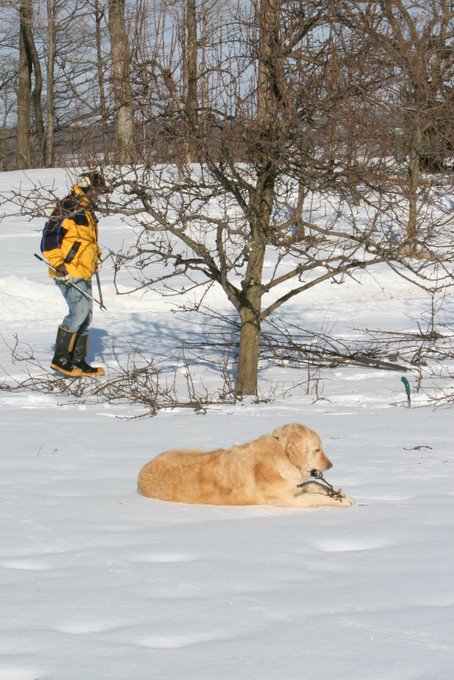
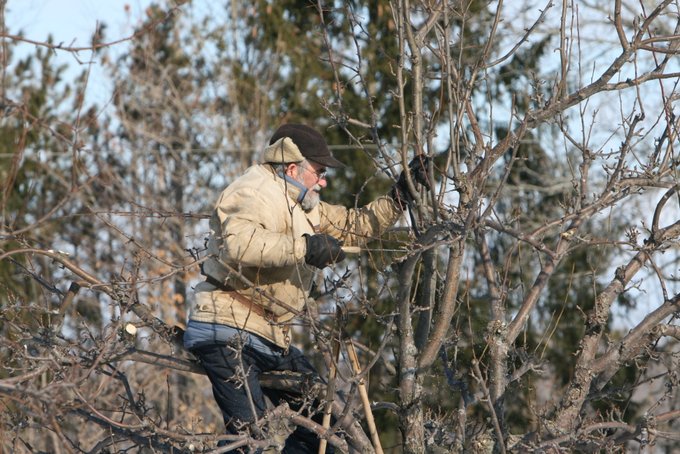
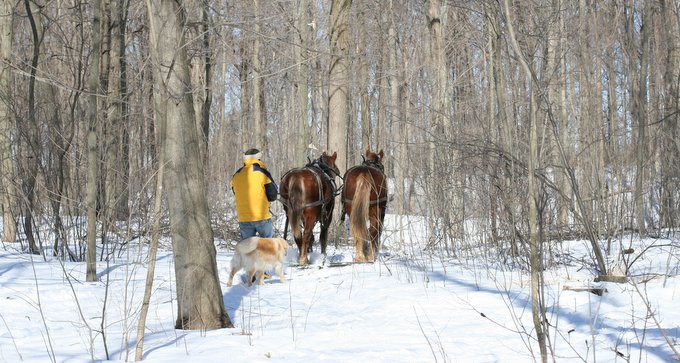
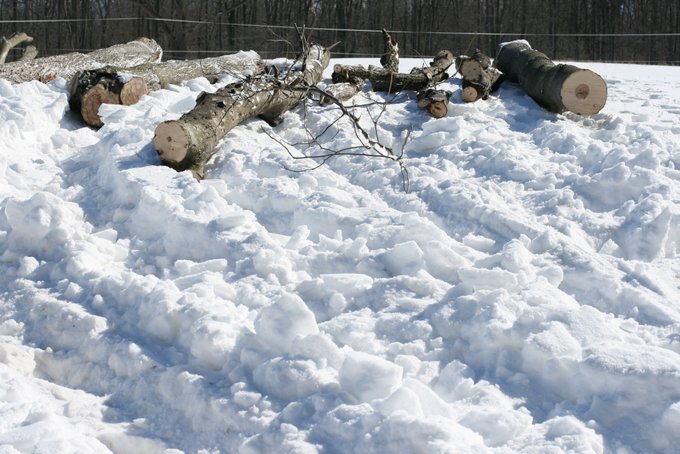
Ken and Grayden have been working at pruning our fruit trees and cutting and skidding out logs to be cut up later for firewood and lumber.
January came and went and February is almost over! We have had a busy snowy winter filled with all the usual winter activities: hiring interns; farmer meetings and conferences; reading and stoking the fire as well as CSA seed ordering and garden planning. Ken has been busy sawing lumber and getting the horse tread mill /flour mill set up. It is almost ready to try out. We will have to have a special post just for that! I have been perfecting a sourdough bread recipe that uses 100% Orchard Hill Farm sifted whole wheat flour. A u-tube video is coming soon…
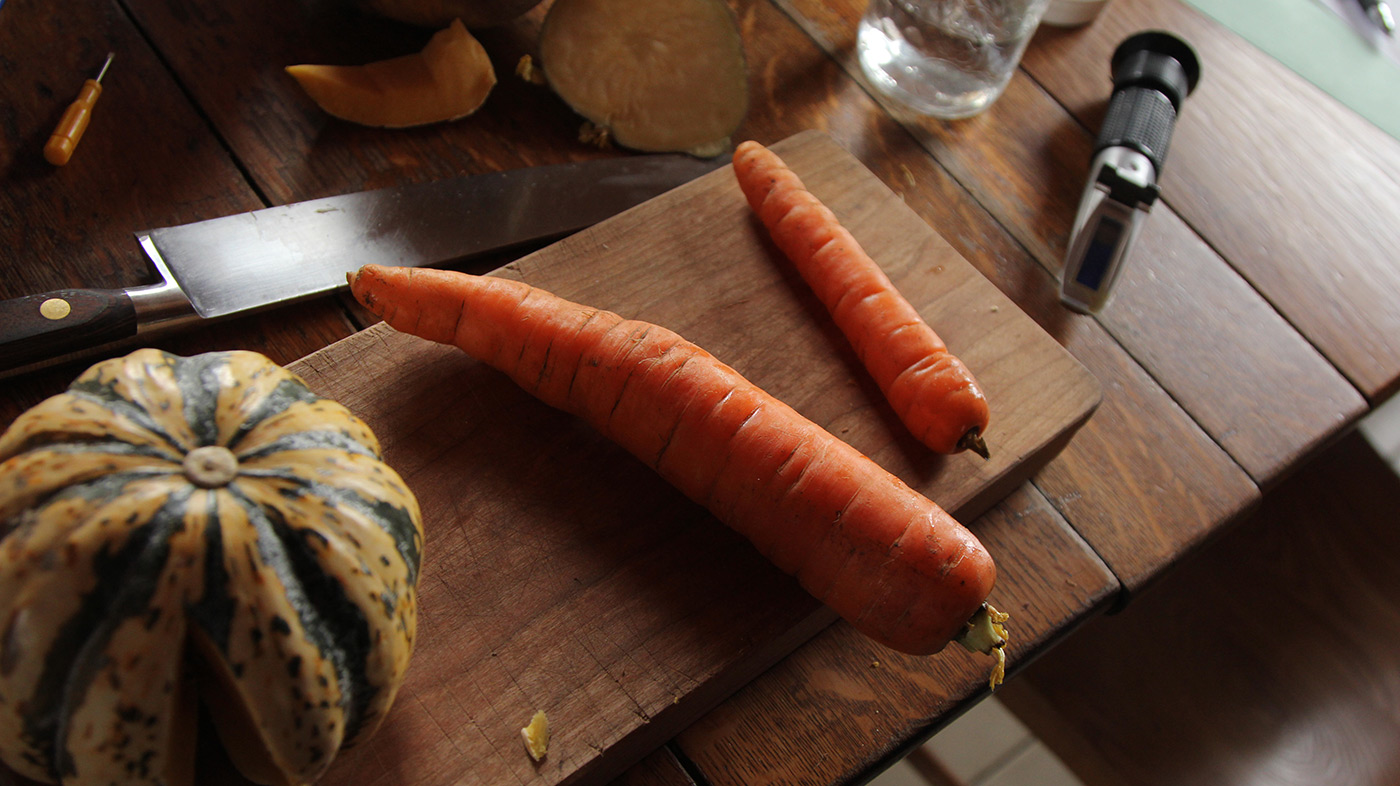
Ken continues to study soil plant nutrition and as always he is striving to find ways to improve the nutritional quality of the food we produce on our farm for our CSA. This week we got out the refractometer and measured some of our stored vegetables with a Birx test (measure of sugar and minerals in the juice of the fruit or vegetable or the sap of the plant). One carrot was 6.5 (a little better than average) and the Sweet Dumpling Squash 12.5 ( between good and excellent).
Our Suffolk Punch horses are wintering well. The frozen ground and snow pack make for a good winter paddock. It is much better than a muddy wet winter. Eli, our young Suffolk Stallion, is coming three this year and is proving to be a very well mannered sensible horse. He is running with the herd and they are all getting along. We installed wooden floors in all the standing stalls with ash from our woods, that Ken was able to saw himself. It made mucking out today easier and should be better for the horses legs when they are in their stalls.
Our son, Grayden, has moved back home and plans to work on the farm part time this season. It is great to have him around and we look forward an upswing in the quality of the photo record of the farm as he adds his professional skills in that area. (He took the photos for this entry and formatted them.) We also anticipate a good season with an able team of interns we expect the first three to arrive the last week of March. The fourth is coming in May, after her schooling is finished.
Our big news on the Suffolk front is that we are going to host the American Suffolk Horse Association Annual Meeting here September 12-14. Ken has been dreaming up lots of fun activities for the horses. We will be inviting Suffolk owners to bring horses here to show off and participate in events. Suffolk horses are a rare bred and it is exciting to have and event in Ontario to celebrate the breed.
Squeezing Carrot Juice into RefractometerKen Reading the RefractometerBrixTable
Mulching StrawberriesMulching Done with Bill’s Help Too!
As the year draws to a close one job that always needs doing is tucking in next year’s strawberries for the winter with mulch. As we were working at the job, I realized that Ken and I have mulched strawberries every year since 1978, when we grew our first plants. It is one of the most consistent annual farm jobs of our farming careers. Completing the farming year with a familiar annual task is satisfying. I enjoy the change of pace that goes with the seasons and our farming life, the rhythms and patterns are somehow reassuring. Now I am ready to turn my focus inward and enjoy nesting, holidays and a bit of hibernation before I start ordering seeds and planning next year’s garden.
Last Fall CSA Pick-up taken by Jim ConradLast Fall CSA Pick-up taken by Jim ConradLast Fall CSA Pick-up taken by Jim Conrad
We managed to have a beautiful last Fall CSA pick-up despite the big snow that proceeded it. CSA member, Jim Conrad, helped us out with all the Fall pick-ups and was ready with his camera on the last day. I am happy he was able to get some pictures of the beautiful array of produce before the pick-up began.
Ken and Bill have been sawing logs and the”backlog” is finally beginning to go down a bit. After the Fall CSA ended Ken and I took off for a week in Oregon to visit our daughter and her family. While Ken was there he toured some wood working and lumber businesses and was inspired by the beauty of wood and what can be made from it.
I have had time to hunt up some recipes and found a corn muffin that uses squash! It is quite yummy. The last time I made it I used sweet potato instead of squash and that worked well too. It is from The Cook’s Garden Edited by Liz Primeau (Canadian Gardening Collection).
BUTTERCUP CORN MUFFINS
1 cup cornmeal
1 cup all-purpose flour
1 3/4 tsp baking powder
1 tsp baking soda
1 tsp salt
1 tbsp. chopped fresh marjoram or oregano
1 tbsp. chopped parsley
1 or 2 green onions, finely chopped
1 cup fresh or frozen (thawed, drained) corn
2 large eggs
3/4 cup plain yogurt
3/4 cup olive oil
1 cup mashed, cooked buttercup squash
Preheat oven to 425 degrees. Lightly butter muffin tin and set aside.
In large bowl, combine cornmeal, flour, baking powder, baking soda, salt, marjoram, parsley, green onions and corn. Stir together well, then set aside.
In another mixing bowl, beat eggs together lightly, then incorporate yogurt and olive oil. Blend in squash until mixture is smooth. Add squash mixture to the cornmeal mixture and stir until well incorporated, but do not beat heavily.
Spoon mixture into muffin cups about 2/3 full. Bake for 25 to 30 minutes, or until browned and a tester emerges cleanly. Let cool for a few minutes in the muffing tin. Serve warm with butter and red pepper jelly.
Hoop House “B” Unharmed will save the day. Providing Greens for our last Fall CSA Pick-up.
We have been moving snow for the past two days after the 30 inches we got on Saturday night. Fortunately, we have the root crops for next Saturday’s last Fall CSA pick-up all dug and in cold storage! We will be digging kale out of the snow later in the week and harvesting salad greens from under one collapsed hoop house. The weight of the snow was too much for it! Yesterday, we took a team of Suffolk Punch horses out to break a trail with the big bob sled and they were so worn out from ploughing through the snow that we had to turn around before we reached the main garden area and head back up to the barn. The snow has settled somewhat today and we are expecting to be able to make it down to the garden by the end of the week.
I have had my eye out for onion recipes because we have had such a bumper crop of onions. The following two recipes are from Small-Batch Preserving by Ellie Topp and Margaret Howard.
Caramelized Red Onion Relish
Balsamic vinegar is the magic ingredient in this recipe. It adds a pungent sweetness to the caramelized onions. Serve with barbecued or broiled meats such as steak, lamb chops and chicken.
2 large red onions, peeled
1/4 cup firmly packed brown sugar
1 cup dry red wine
3 tbsp balsamic vinegar
1/8 tsp each: salt and freshly ground pepper
1. Slice onions into very thin slices. Combine onions and sugar in a heavy non-stick skillet. Cook, uncovered, over medium-high heat for about 25 minutes or until onions turn golden and start to caramelize, stirring frequently.
2. Stir in wine and vinegar. Bring to a boil over hight heat, reduce heat to low and cook for about 15 minutes or until most of the liquid has evaporated, stirring frequently.
3. Season to taste with salt and pepper. Spoon into clean jar and refrigerate to use within 3 weeks or freeze.
Caramelized Red Onion and Tomato Pizza
This tasty appetizer is easily prepared using Caramelized Red Onion Relish
1/2 cup Caramelized Red Onion Relish
4 individual pizza crusts
1 medium tomato, diced
2 cups shredded mozzarella cheese
Divide onion mixture among pizza crusts, spreading evenly. Combine tomato and cheese; sprinkle over onion. Bake in a 350 degree F oven for about 10 minutes or until hot and cheese is melted. Cut each pizza into 6 wedges.
It’s hard to believe that we are already at the end of the Spring/Summer CSA season! Yesterday, it felt more like July with the hot dry weather. I guess we are making up for the cool spring. Our squash harvest has been more drawn out than ever before, while we wait for some of the squash to ripen in the field. It got off to a slow start in the spring and has needed the warm sunny weather of the last week to catch up. We are planning on bringing all the remaining squash up today. Yesterday, we finished digging the last six rows of potatoes and the field has been disced. The popcorn and ornamental corn was all picked too. Gradually, we are finishing up all the big fall harvest jobs and then we have the garlic to plant and the winter fire wood to bring up to the woodshed. Our pick-up room doubles as our wood shed. Once the main season CSA is finished we fill it up with firewood. The greenhouse is used as our Fall CSA pick-up room, because it doesn’t freeze. The produce for the Fall CSA looks great and we are looking forward to abundant harvests of stored and fresh picked produce throughout the fall. Today, we will plant a couple of the hoop houses for fresh baby greens to add to the in November pick-ups. I enjoy the challenge of extending the season and the fresh picked fall greens have such full flavour they are a big hit. We still have a few spots left in our Fall CSA.
We are accepting applications for the 2014 Spring/Fall CSA – Click the following link: Orchard Hill Farm Application
Ken and I had a wonderful trip to Vermont and saw about 30 Suffolk Punch Draft horses on our travels. Considering it is a rare breed that was quite something. We also had fun visiting Jolianne and Jonathan, two of our past apprentices and seeing their CSA farm operation Ferme Melilot in Quebec. (www.fermemelilot.com). It’s amazing how quickly they have advanced considering how long it took us to find our way forward with our CSA farming. It is a tribute to the individuals, but also demonstrates the great benefit there is in farm apprenticeships. On route we stopped off at Prince Edward County and I picked up a cookbook with some seasonal recipes that looked good. Here are a couple adapted from The Miller’s House Cookbook by Robert Simpson:
GRATED RUTABAGA CAKES
1 lb rutabaga, peeled
1/2 lb baking potatoes
1/3 cup all-purpose flour
2 eggs, lightly beaten
1 egg yolk
1/2 cup thinly sliced green onion or cooking onion
1/2 cup vegetable oil
Coarsely grate the rutabaga and potatoes. In a kitchen towel squeeze the grated vegetables to extract the excess liquid. In a bowl toss the grated vegetables with the flour, stir in the whole eggs, egg yolk, onion and season the mixture with salt and pepper.
In a large skillet heat 2 tbsp of the oil over moderate heat until it is hot but not smoking and in it fry rounded tablespoons of the mixture in batches, flattening the cakes with a slotted spatula, for 1-3 minutes on each side, or until they are golden and tender. Transfer the cakes as they are fried to a warm heat proof platter, and adding more oil to the skillet as needed. If necessary,reheat the cakes before serving.
yield: about 20 cakes
SWEET POTATO SOUP
1/2 cup onion, finely chopped
1/2 cup leeks, finely chopped ( add 1 cup onion if you don’t have leeks)
1 large cloves garlic, minced
2 large carrots, sliced thin
2 tbsp unsalted butter
1/2 lb sweet potato (2 medium size)
1 baking potato
2 1/2 – 3 cups chicken broth
1/2 cup white wine
3/4 cup water
Cook the onion, leeks, garlic and carrots in the butter over moderate heat, stirring, until the vegetables are soft. Add the sweet potatoes, baking potato, broth, wine and water and simmer the mixture covered for 15-20 minutes or until vegetables are very tender.
In blender puree the mixture until it is very smooth. Add additional broth to thin if necessary. Season with salt and pepper to taste.
Digging Sweet Potatoes with our Horse Drawn Potato Digger
We tried the horse drawn potato digger to dig our sweet potatoes and it worked like a charm! The sweet potatoes are now curing in one of our hoop houses. They are different than any other vegetable because they need heat to get sweet instead of cold.
We are heading into the last few weeks of the 2013 Main Season CSA and I wanted to make sure everyone knew the last pick-up days and the date of the CSA Pot Luck:
Last Saturday Pick-up: October 5
Last Tuesday Pick-up: October 8
CSA End of Season Pot Luck: Sunday, October 6 – (2:00-4:00 p.m.) Bring food to share, plates, cutlery and lawn chairs. We will have horse drawn rides after the food.
After a backward cool spring it has turned into a bountiful year for the garden with record harvests of many crops. In our CSA, you as members, share the risk with us, the flip side is us sharing the bounty with you – so help yourselves to the “extras”.
Pick-your-own fall Raspberries will continue until the end of the season or until we have a killing freeze. We will be harvesting the first of the fall carrots on Saturday and they are the sweetest of the season. Yet to come are celeriac, rutabaga, parsnip, brussels sprouts, chinese cabbage and winter radish along with the full complement of squash and pumpkin. I have done a back search of some of the great recipes on our blog and linked to them for you to refer to. I think it is a soup time of year. When we give celeriac don’t be afraid of it’s ugly appearance, because it is truly lovely in soup. The Potato and Leek Soup #1 recipe also gives great directions for cleaning leeks. When the rutabaga and parsnip appear I always make Winter Warmer Soup. Even if you aren’t a fan of strong flavoured root vegetables, in this recipe they all blend together deliciously with a hint of ginger and lemon. These soups are always better the second day, after the flavours have had a chance to blend, so you can make them ahead and enjoy them later when you are too busy to cook! Pumpkin Honey is a lovely spread on pumpkin muffins. It has the consistency of apple butter with lemon/pumpkin goodness. Pumpkin Custard is one of Ken’s favourites. It is like a good pumpkin pie without the soggy crust. Keep in mind that any pumpkin recipe can be made with squash. Kale Chips with Cashews are deluxe and also call for a red pepper. You can freeze peppers and use them in the winter in this recipe. No need to blanch them just take out the seeds and freeze. Chocolate Beet Cake is rich and moist and is also better the second day. I love the Roasted Beet – Arugula Salad. Really, I just love fall with the golden sunlight, harvesting the fruits of our labours and all the wonderful full flavours of the roots and greens. When the cold weather comes the starch in many plants turns to sugar and makes them deliciously sweet.
Ken and I are travelling to Vermont next week to attend 2013 Draft Animal Power Field Days, where Ken is giving a workshop on Horse Powered CSA. The apprentices will be running the show here at the farm. If you need to contact them please phone: 519-775-2670 for the pick-ups of September 24, 28 and October 1.
We have only 10 shares left in the 2013 Fall CSA. If any of you want to continue enjoying the rich tastes of the fall produce, and haven’t already signed up, now is your chance!