Bunkhouse Construction  ~  Seeds Ordered  ~  Farm Dinners ~

It finally feels like winter here on the farm. It’s been nice to have some snow stick around for a few days and give us a break from the never-ending mud! I’ve been enjoying seeing familiar names roll in for the CSA, and a few new ones – there is still room to sign up if you haven’t.

Winter Fun
Winter Fun

We are keeping busier than normal this winter with the slow and steady construction on the bunkhouse (Martha’s been wondering if we should call it something different, but Ken’s happy to keep calling it the bunkhouse). We have installed the rest of the second floor, which involved cutting down trees in the woodlot and sawing them, making them into beams and installing them in the timberframe already standing, and then laying the floorboards. The floorboards were dried in the woodkiln that you CSA members last year may remembered being constructed in August. Now we have electricians running the wire to install the electricity, and when that is finished, we are going to get busy with insulation, vapor barrier, drywall, taping, mudding and painting! Martha and Ken are hoping to have an operational kitchen and bathroom by April, when the interns arrive.

Mulching strawberries in a onesie!

In January, we mulched the strawberries – it’s always one of the last outdoor jobs of the season – we got to it a little bit late this year, but they’re pretty forgiving. We use our own organic straw for the mulching, which is nice because sometimes it’s hard to find organic straw to buy for that sort of thing. The straw is from the oats, wheat, spelt or rye that we use on the farm to feed to the animals, and for Seth’s bread at La Houlette de Vie. The strawberries like to be protected from the wind and from the freeze/thaw cycles that often accompany the warm up in the spring. When it warms and the plants start to grow again in the spring, we rake the straw from the top of the rows into the aisles and it helps to insulate the soil, prevent erosion, keep the strawberries clean and provides a nice soft place for us to kneel while we pick the berries in June.

We have hired three new interns for this season – a couple with quite a bit of farming experience in Quebec and Germany, and a fellow from Guelph with a culinary background. It’s always interesting to get to know a new crew of people and see what they have to bring to the table. They will arrive April 2nd and stay until October.

 

Frannie garden planning

I’ve been planning the garden – what will go where, what seeds we have, what we need to order. I ordered seeds this year from Tourne Sol, which is a co-operative organic farm in Quebec, founded by one of our past apprentices. Here are some of the new things that I’ve ordered this year – fava and edamame beans, ground cherries, flint corn – a relatively rare variety called Roy Calais – that has both red and yellow kernels and a really lovely corn-y flavor to the cornmeal…the dry corn is a test and you’ll probably only get a small portion of cornmeal, but it will be fun to try and may show up in some farm dinners in the future. We also have poblano peppers (when they’re red and dried we call them ‘ancho’ peppers – same pepper though) in the order, and some ‘snow leopard’ melons that are white with green markings on the outside, with a fragrant orange flesh. I also went a little nuts with the flower order – as long as I can get them to grow into plants, you should expect a new and different variety of flowers in the garden for picking this year! I love architectural plants and so I’ve ordered some that I will use the foliage or seeds as décor, and some more flowers suitable for drying. I love love love having flowers in the pick up room and in the house in the summer. It’s got to be one of my top 10 favorite things about living on the farm, which I think is a little silly sometimes, but the heart wants what the wants!

The other thing in the works is some loose planning of the farm dinners for 2017! I’ve got a 50 seat dinners planned for Saturdays June 17th, July 8th and September 23rd. I expect tickets will go fast, and CSA members will get first dibs. Stayed tuned for more details!

Two Potato Vindaloo
Two Potato Vindaloo

What have you been cooking this winter? A few members have said that they’re just working through the last of their squash, or root vegetables. We have been eating well here on the farm, with a lot of vegetables in the root cellar and cooler. Last week I made root vegetable latkes – like potato pancakes, but with potato, celeriac, rutabaga and onion, bound with egg and cornstarch. We have been eating corn and peas from the freezer and just unearthed a motherlode of strawberries, so we’ve been making smoothies and ‘strawberry shakes’ – a staple of my childhood – growing up on a strawberry farm had its perks! We have also been enjoying the ‘fruits’ of our preserving labor – tomato soup made from tomato sauce that we canned, jams and jellies and juices, that eggplant pickle that I wouldn’t shut up about in August – so delicious! I also find a lot more time to ferment in the winter – seems like the wrong season, but we still have so many root vegetables that are perfect for fermenting into pickles and krauts.

Take care and stay warm.

Ellen

IMG_7989

Last Pick up of the Season is Saturday!img_7284

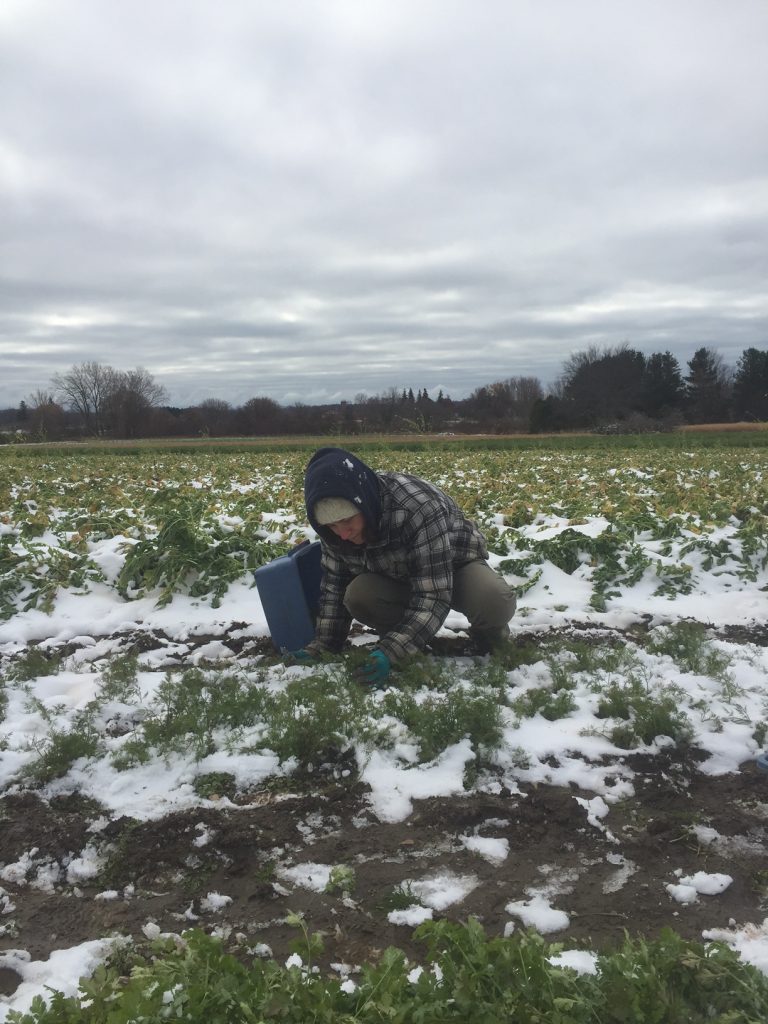
Here it is almost December and we just picked the last of the tomatoes – I know, every pick up I say it’s going to be the last of the tomatoes, but this time it’s for real! Last night they got frozen, so it’s really over. But yesterday we picked the last of them, and although they won’t win any blind taste test awards, they still add a little juicy something to a salad. But it’s amazing that in the same day, we were picking herbs in the snow! The large hoophouse that the tomatoes were in holds a lot of residual heat and kept them from freezing for a few days. We also grew the head lettuce in the large hoophouse.

The bunkhouse renovation continues to creep along – the siding is almost all up, and now we are in the process of installing the electrical line. Today is Ken’s 66th birthday and he’s spent it on a mini back-hoe, digging the trench for the electric line. I mean, it’s a toy, right?

image1Next week, Aaron and I are going with the girls to an ecological farmers conference (EFAO) in Kingston – it’s the farmer’s version of a vacation! But it’s always fun to spend time with fellow farmers, and it really only happens in the winter, and I look forward to it. I’m also looking forward to a few months of recharging and undertaking some maintenance and creative projects. And recreational exercise! Then planning the garden & projects for next year!

We will keep you posted on our winter projects. Keep warm!

As I sit at my computer, the wind is blustering outside and the occasional sheet of rain blows against the window. But the fire is warm and I’m getting hungry typing up the Pumpkin Breakfast Cake recipe. And I’m so surprised/appalled/relieved that Trump is the president of the United States and my little family has moved to Canada. You can guess which emotions are riding on which facts…it’s hard to concentrate on harvesting vegetables or which photo to put on the blog. However, there will be a lot of vegetables to pick up on Saturday and I want you to feel secure and confident that you have a plan for those vegetables! So here are a few recipes to get you excited.Martha 'profile' for documentary

Some of you noticed (or couldn’t help but notice) the film crew here last pick-up. They have been here a number of times, filming a documentary about working horses – people like us that use them for farming, as well as people that use horses for logging, or heavy horse pulling and shows. Ken, a seeming introvert, loves to spread the good word on horse farming and isn’t camera shy at all! Thanks for your patience with the filming – they won’t be here on pick-up day again.

We have been making (slow) steady progress on the bunkhouse renovation – you will notice on Saturday that all of the outside walls have been removed and replaced with stud walls. We have begun to replace the windows, and are awaiting the delivery of the new windows that we have ordered. Martha is planning the kitchen now. Next a mason is going to install a short stone wall around the bottom of the outside.

Finally, I would like to give a little shout out to Kelsey! She’s the remaining intern – she’s worked so hard this season, and she’s been putting up with the shoulder season odd ball work schedule. When she got into this, she didn’t even know she was signing up to drive horses, let alone plow! Lately she’s been the number one teamster and is taking care of all the chores. Also she might have to be the only intern (reluctantly) interviewed by the documentary team because she’s the only one left! If you see her, give her a fist bump of thanks and tell her she’s the best.Kelsey


Roasted Squash with Sweet Spices and Lime

Another recipe from Plenty – the lime and cilantro are a nice way to play down the sweetness of the squash. If you’re not into the idea of cardamom, just do the squash slices plain, or with a little cumin and coriander (2 tsp cumin, 1 tsp coriander). The lime, though, is critical and so delicious. Serves 4-6.

2 limes, skin cut off, quartered and thinly sliced

Salt

1 Tbsp olive oil

2 Tbsp green cardamom pods (or sub 1 ½ tsp ground cardamom)

1 tsp allspice

3 Tbsp olive oil

1 medium butternut squash

½ C whole milk yogurt

2 ½ Tbsp tahini

big pinch salt

1 Tbsp lime juice

2 Tbsp water

1 green chile, thinly sliced (optional)

2/3 cup cilantro leaves, picked from the stems

Toss together the little peeled lime slices with a good pinch of salt and the olive oil. Set aside.

Pound the cardamom pods in a mortar and pestle until the pods split open. Remove the little black seeds and pound or grind in a spice grinder until finely ground. Place in a bowl with the allspice and 3 Tbsp olive oil.

Slice the squash in half lengthwise, scoop out the seeds and then slice into ½ inch thick slices. Leave the skin on (it’s easier to remove, if you wish, after it’s roasted – or just leave it on). Brush with all of the spiced olive oil mixture and sprinkle with salt. Place the slices on a parchment lined baking sheet.

Roast at 400˚ for about 15 minutes, until the squash is tender.

While it’s roasting, mix together the yogurt drizzle. Mix in a bowl the yogurt, tahini, lime juice, salt and water. It should be a pourable consistency.

When the squash is done, move it to a large platter. Sprinkle with the lime slices, the yogurt drizzle and then garnish with the green chile slices and the sprigs of cilantro. It’s very pretty.


Pumpkin and Orange Breakfast Cake

My favorite sweet pumpkin treat! I don’t know why it’s called ‘Breakfast Cake’ except to give you an excuse to eat it for breakfast. From ‘In the Sweet Kitchen’ by Regan Daley.

You can use any squash or pumpkin for this recipe, just bake it and scoop the flesh (no seeds or skin). My favorite lazy way to prepare squash or pumpkin is to stab it a few times and throw it in the oven on a cookie sheet (about 375˚) until it’s soft. It’s much easier to remove the seeds after it’s cooked because you don’t have to cut it open.

1 C butter, room temp

1 C sugar

2 Tbsp grated orange zest

3 eggs, room temp

1 C pumpkin or squash puree

1 ½ C all purpose flour

½ C pastry flour

2 tsp baking powder

¼ tsp salt

Preheat oven to 350˚

Butter a 9 inch fluted tube pan (or a few small loaf pans) and set aside.

Cream the butter, sugar and orange zest together until light and fluffy. Add the eggs and scrape the sides of the bowl. Beat in the pumpkin puree.

Sift together the flours, baking powder and salt. Add to the pumpkin batter in 3 or 4 stages, blending gently but thoroughly after each addition.

Scrape into the prepared pan(s).

Bake for 50-60 minutes (for a large pan), or 30ish minutes for smaller pans. The sides of the cake should be pulling away from the pan and a wooden skewer poked into the center should come out clean.

Orange Syrup (optional! It’s really good without it)

Juice of 1 large orange

½ C sugar

Combine the juice and the sugar in a small saucepan over low heat and stir until the sugar has dissolved. Increase the heat, bringing the syrup to a boil. Boil without stirring for 2 minutes, then use immediately, or allow to cool and refrigerate for up to 3 days. Spoon warm over individual slices of cake.


Baked Root Fries with Rosemary and Garlic

Why have potato fries when you could use rutabaga or parsnip? Rutabagas are a high source of zinc and just a half cup of parsnips provide us with 3 grams of fiber – and a high percentage of that is soluble fiber.

2 ½ Lb parsnip, rutabaga or carrot

3 tbsp. olive oil

½ – 1 tsp. sea salt

½ tsp. black pepper

4 cloves of garlic [minced]

4 sprigs of fresh rosemary

Preheat oven to 425º and line a baking sheet with parchment paper.

Wash and peel the root, then cut into french fry-sized pieces, about ¼” by ¼”.

In a large bowl, toss chopped root veg with minced garlic, olive oil, rosemary, ½ tsp salt, and pepper. Mix together using hands under the fries are lightly coated.

Bake for 35-40 minutes, removing once or twice to stir fries around on baking sheet.

Taste and sprinkle with additional salt if desired.


Dipping Sauce Ideas


Chipotle-Mayo Dip

¼ C veganaise or mayonnaise

2 Tbsp lemon juice

½ tsp chipotle pd (or 1 tsp minced canned chipotle)

½ tsp chile powder

¼ tsp sea salt

Mix all ingredients together in a small bowl


Sriracha Ketchup Dip

2 Tbsp sriracha hot sauce

2 Tbsp ketchup


Tahini-Yogurt Dip

½ C yogurt

2 Tbsp tahini

1 tsp minced garlic

1 Tbsp lemon juice

½ tsp salt


Time for another fall pick-up, and some more recipes!

You may notice that we have a lot of construction under way – the walls of the bunkhouse have almost all been removed and replaced with stud walls. We say farewell to Heidi this week – she’s been with us since the end of March! It’s amazing to think all of the things we have done since March. We wish her well in her future endeavors and give so much thanks for all her hard work.


Winter Warmer Soup

From The Complete Encyclopedia of Vegetables and Vegetarian Cooking, by Roz Denny and Christine Ingram

This soup is a Martha special – you might have seen it in this blog before – a great one for using up some root vegetables (especially handy for that rutabaga).

3 medium carrots, chopped

1 large onion, chopped – sub one leek, white part only, chopped

1 large potato, chopped

1 large parsnip, chopped – sub kohlrabi or celeriac! (1 cup)

1 large rutabaga, chopped – maybe not one of OUR large ones (about 2 cups)

2 tbsp vegetable oil

2 tbsp butter

salt and freshly ground black pepper

1 inch piece fresh ginger, peeled and grated

1 1/4 cups milk

3 tbsp cream

2 tbsp fresh dill, chopped

fresh lemon


  1. Put the carrots, potato, parsnip, turnip and onion into a large saucepan with the oil and butter. Fry lightly, then cover and sweat the vegetables on a very low heat for 15 minutes, shaking the pan occasionally.
  2. Pour in enough water to just cover the vegetables, bring to a boil and season well. Cover and simmer for 20 minutes until the vegetables are soft.
  3. Strain the vegetables, reserving the liquid, add the ginger and puree in a food processor or blender until smooth.
  4. Return the puree and half the liquid to the pan. Add the milk and stir while the soup gently reheats. Add more or all of the cooking liquid to the consistency you would like.
  5. Remove from the heat, stir in the cream, dill, lemon juice and extra seasoning, if necessary. Reheat the soup, if you wish, but do not allow it to boil as you do or, or it may curdle.


Basic Chicken Stock

From Nourishing Traditions by Sally Fallon

Since we have stewing chickens for sale Saturday, might as well post a stock recipe here too. This is a very basic recipe – usually I also add a head of garlic chopped in half, a few sprigs of thyme, and a big pinch of salt. Freeze it in yogurt containers to use in soups. Or salt to taste and drink as is.

1 whole free-range chicken or 2-3 pounds of bony chicken parts (necks, backs, breastbones, wings, or other chicken scraps

gizzards from one chicken (optional)

feet from one chicken (optional)

1 gallon cold filtered water

2 tablespoons vinegar

1 large onion, roughly chopped – sub the green tops from leeks!

2 carrots, peeled and roughly chopped

3 sticks of celery, roughly chopped

1 bunch parsley

If you are using the whole chicken, cut off the wings and remove the neck, fat glands and gizzards from the cavity. By all means, use the chicken feet if you can find them. They are full of gelatin. If you can find it, use a whole chicken, with the head intact. You can sometimes find these in Oriental markets, but make sure you look for farm-raised, free-range birds for the best nutrition.

Cut the chicken parts into pieces – if you’re using a whole chicken, cut off the wings and the neck and cut those down. Put the chicken and/or chicken pieces in a large stainless steel stock pot and cover with the water, vinegar and veggies (minus the parsley). Let the mixture stand for 30-60 minutes. Bring to a boil and skim off any foam that rises to the top. Once you have that all skimmed, reduce the heat and cook (covered) for 6 hours to 24 hours. The longer the better – it will yield a much richer stock. About 10 minutes before the stock is done, add the parsley. The parsley is important because it adds mineral ions to the broth.

Let the broth cool slightly and then remove the chicken pieces with a slotted spoon or tongs. If you used a whole chicken, make sure you save the meat for casseroles or soup. The skin and small bones will be soft enough that you can feed them to your cat or dog without any harm. Strain the stock into another bowl and stick it in the fridge until the broth congeals and the fat rises to the top. Skim off the fat and reserve it for future projects.


Fennel, Celeriac and Parsley Salad

This is one of my favorite winter salads – I’ve made it for more than a few American Thanksgivings – when you want the salad to be bright, fresh and interesting but not take up a lot of space on a full plate. Using a mandolin to slice the celeriac, fennel, onion and cheese makes it really fast. If all you have in the fridge is shaker parmesan, and you don’t have any pumpkin seeds, it’ll still taste amazing.

1/2 bulb (8 oz) celery root (celeriac), peeled, and cut into long, thin strips (2 cups)

8 ounces fennel (outer layer and tough stems discarded), cored, then cut into long, thin strips (2 cups), fronds reserved for optional garnish

1/2 small red onion, cut into thin slices (2/3 cup)

Leaves from 1 or 2 bunches parsley, preferably flat-leaf, chopped (2 cups packed)

1/4 cup olive oil, or more to taste

Freshly squeezed juice of 1 lemon, or more to taste (2 tablespoons)

1/2 teaspoon fine sea salt, or more to taste

Freshly ground white pepper

2 tablespoons unsalted pumpkin seeds, toasted (optional)

2 oz pecorino Romano cheese, shaved into curls with a vegetable peeler

Combine the celery root, fennel, onion and parsley in a large bowl; toss to combine. Add the oil, lemon juice and salt and the white pepper to taste; toss to combine. Taste, and adjust the acidity or seasoning as needed.

Finish the salad with the toasted pumpkin seeds and cheese. Garnish with the fennel fronds, if desired, and serve.

NOTE: To toast pumpkin seeds, toss them with 1 tablespoon of canola oil and spread in a single layer on a lined baking sheet. Bake in a 350-degree oven for 6 to 8 minutes; allow to cool completely.


unspecified-4Every farmer knows the secret (how is it a secret?!!) that fall is the best season. There are no bugs. Let’s just start there – the flies are pretty much gone, same with the mosquitos. We also don’t have to cover everything with row cover to keep the flea beetles off. And then there’s the produce! Some of the summer things are still hanging on (tomatoes, peppers, eggplant, green onions), all the root crops are bumping and the greens – all of them – love this time of year. Give a few crops (brussels sprouts, parsnips and kale) a little bit of frost and they get sweeter! It is also (not to flog the tired horse of gratitude) – the time when it’s easiest to feel grateful. We made it through the summer. There’s tons of food. The freaking flies are just a memory. And maybe it’s the chef in me, but I also get very excited for fall because it’s cooking time again! Not the throw-it-together-with-some-olive-oil-and-vinegar kind of cooking that’s the hallmark of summer, but the roast it, braise it, layer it and bake it in the oven kind of cooking that’s so warm and inviting.

There are a few challenges in the fall, from a CSA garden member perspective, because there are some vegetables that might be unfamiliar and you’re not used to cooking. I’ve gathered some recipes that feature some of the more unusual vegetables.

Radishes – all of them (watermelon, green meat, Spanish black and daikon) can be eaten raw and fresh. Try throwing them in with some other roasted vegetables, or into a stir fry. The ‘bite’ of the radish is softened by cooking. I think they taste great fresh with fish, or in a sandwich. They also go really well in almost any coleslaw. They’re also delicious ‘butter poached’ – cook them slowly in a shallow layer in a combo of half water and half butter with a healthy sprinkle of salt, cover the pot, til tender – and pretend that someone else cooked them and you don’t know you just ate a ¼ cup of butter!

Kohlrabi – so delicious fresh. I mean, you can cook it (think of it like a potato) – it’s great roasted or steamed. But really, the crunch and the sweetness is fantastic fresh. Throw it on a veggie tray, in a coleslaw or just sliced in a salad.

Hakurei turnip – almost all the same notes as for kohlrabi – it looks boring (white), but it has great texture fresh(can something be crisp and custard-y at the same time?). Or make a soup with 2 parts onion, a clove or two of garlic (sweat them slowly with butter and salt), then add 1 part turnip. Cover just barely with water, add a big pinch of salt and cook til tender. Puree and taste. Add a little cream (2 Tbsp-1/4 cup) if you like.

Here are a few recipes that deal with some of the odd Fall vegetables. Sorry about the formatting, I’m trying to find something easier (and legible) than hand typing each recipe….

These recipes are from two excellent cookbooks – ‘Roots’ by Diane Morgan and ‘Plenty’ by Yotam Ottolenghi.

Happy cooking!

daikon-apple-slaw black-radish-tuna sweet-potato-fries two-potato-vindaloosweet-pickled-diakoncabbage-kohlrabi-salad


Beautiful Fall Flowers

It is a sure sign that fall is progressing when the flowers in the garden take on their rich fall colours. It is hard to believe that we only have three weeks left after this until the end of our main season CSA. The last Main Season Pick-up days are Tuesday, October 4th and Saturday, October 8th.

One Selection from our Organic Potato Trial

This season we took part in a trial for trying out new crosses for organic potato production. The potatoes were dug last week and we selected the varieties that performed the best, both in terms of yield and leaf hopper resistance. We have a number of selections to keep and grow out again next year to see how they perform. At the end of the month researchers are coming for a field day and we will cook some for a taste test. Ken is looking forward to continuing to work on this project in the years to come.

Bunkhouse with Plaster Damage

As we make room for the next generation on the farm, Ken and Martha are looking to move into what has been the bunkhouse. It is a timber frame with straw bale walls. Unfortunately, the lime sand plaster layer which covers the straw bales, particularly on the east wall, developed cracks. They were patched, but re-cracked and  water got in and the lime sand outer layer separated from the clay under layer. Apparently, we should have added lime to the clay layers to help bind the lime sand layer. It would also have been better to have a larger overhang and perhaps not taken the straw bale wall so high on the east side. An added problem is that there is also some serious air leaks, making it challenging to heat in the winter months. As a result, we have decided to remove the straw bale walls and replace them with stud wall construction.

Solar Wood Drying Kiln under Construction

We need to dry some of our lumber to use in the renovations. Aaron and Heidi have been building a solar wood kiln to speed up the drying process.

Draft Horses Seeding No-Till Cover Crop

Ken is continuing with is no till drill and has planted a series of cover crops and is expecting to plant fall grain later this month both for the horses and for Seth to mill and make into his delicious bread.

Or ‘Thoughts on Autumn, Fall CSA, End of Season Potluck, with Cabbage & Eggplant Recipes’

Bryan's last day
Bryan’s last day

Somehow I find the changing of seasons simultaneously invigorating and relaxing. How can it be both? It seems like the tasks turn a little more inward this time of year. There’s less planting and casting the net forward and more gathering, harvesting and reaping the rewards of all the work earlier in the season. Not that it’s less work, it’s just different work – less hopefulness and more satisfaction.

One of the interns, Bryan, has left to start school – he’s going to be learning about heritage masonry. Next week Martha’s nephew Jesse will be starting to work with us for a few months.

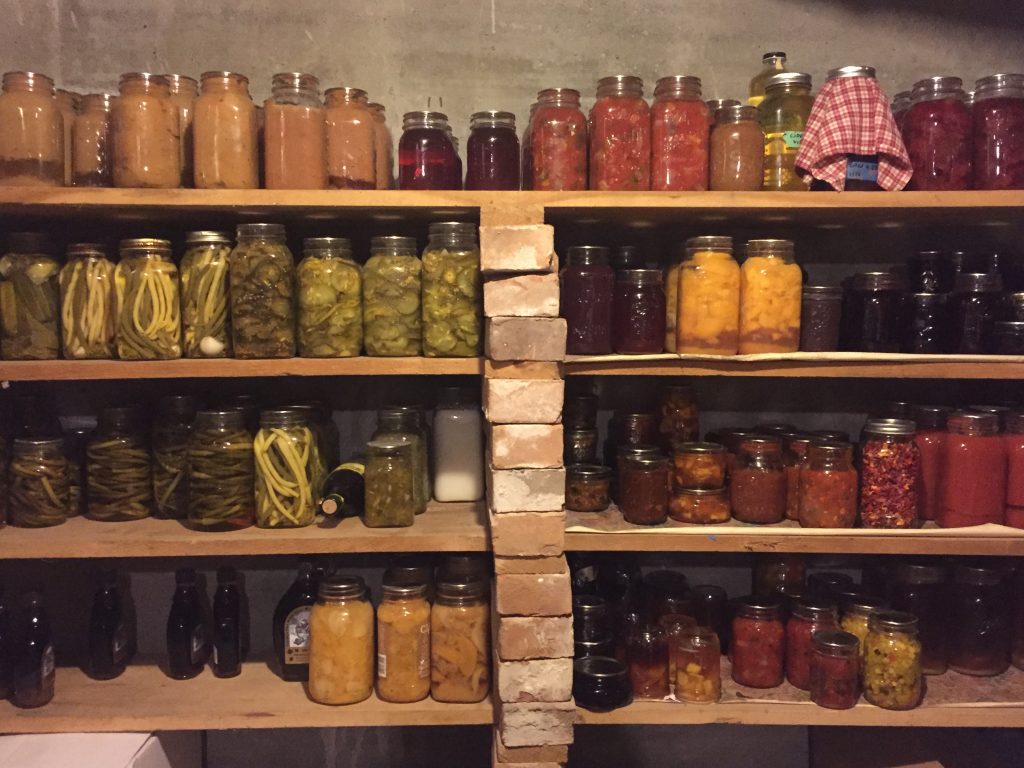
IMG_5706There’s a lot of harvesting and preserving going on – we’re making sure that we’re stocked for winter, as well as starting to stock pile and prepare vegetables for the Fall CSA (see below there’s still room!).  Here’s a little snapshot of what our basement looks like right now – keeping in mind that there are a lot of hands at work here! We have done 80 quarts of tomatoes and sauce, 20 or so canned peaches and pears, numerous chutneys and salsas, as well as sweet pickles and rhubarb, blueberry, and black currant juices. It’s such a treat to pull out a little taste of August in the middle of the winter.

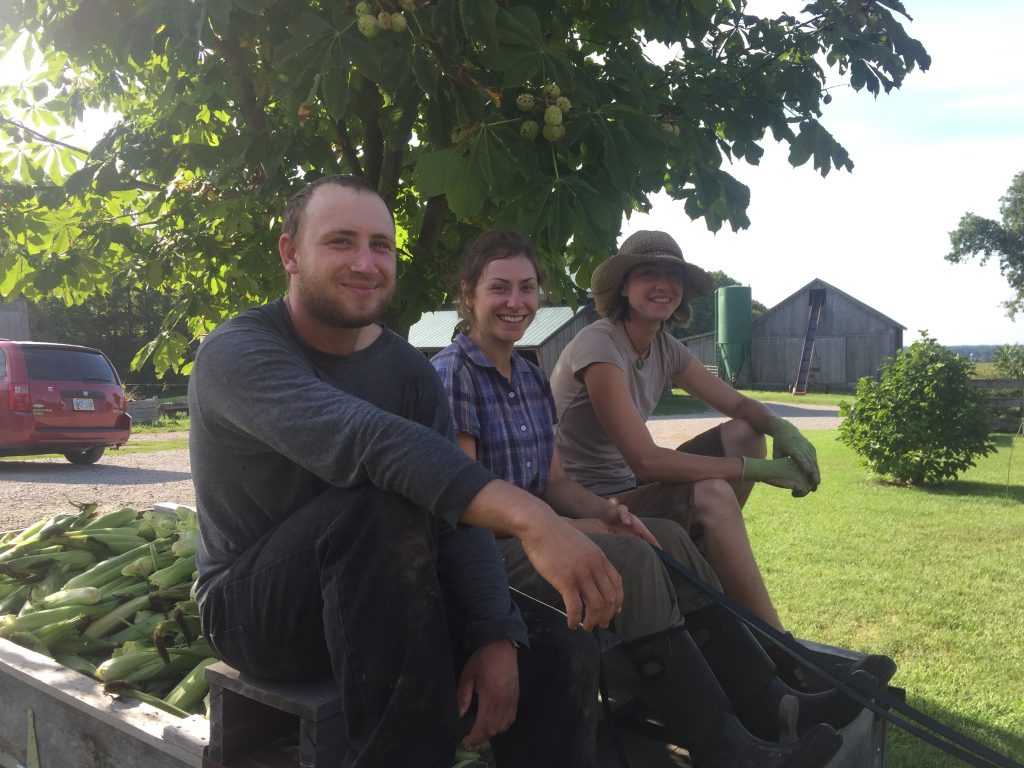
Onion harvest! Heidi, Ellen & Kelsey

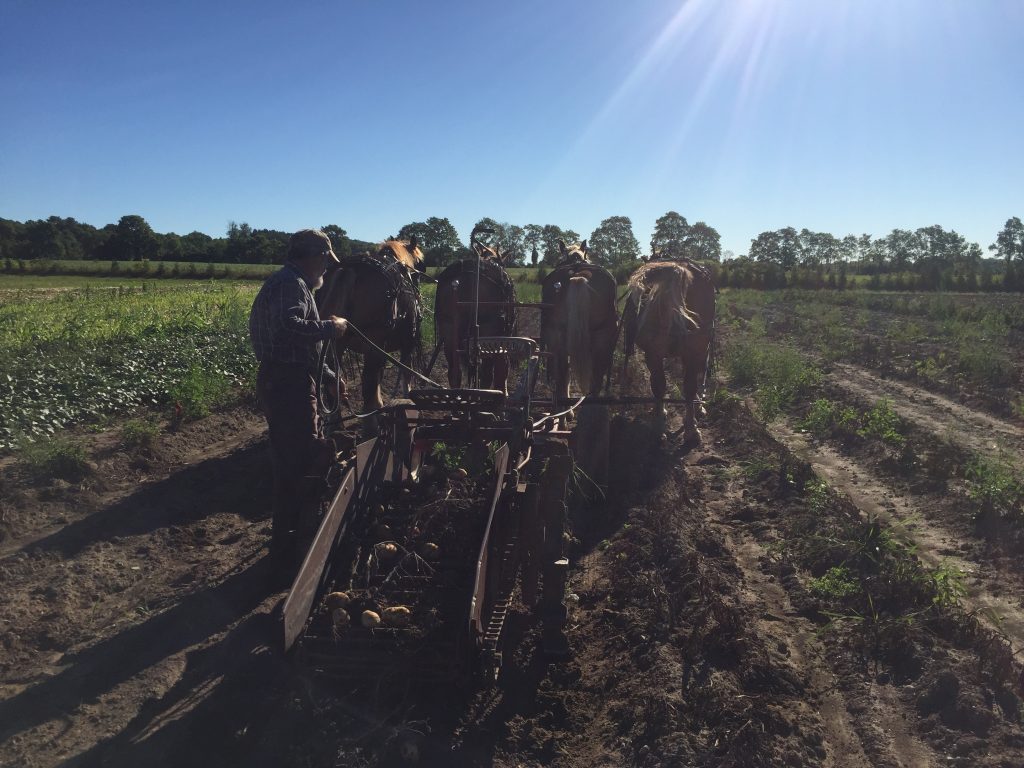
We brought in all of the onions a few weeks ago and now we are starting to bring in all the potatoes. We use the horses and the potato digger to dig the potatoes and then gather them by hand into bags to bring up to the house before washing them in the root washer. This year we have a row of potatoes that we are testing as part of the Bauta Seed Initiative. They help to save and develop varieties of vegetables specifically geared toward organic production. There are a few plants that have done really well and been resistant to leaf hoppers, which is great. They will use the information from our farm and others to narrow down and find the best varieties of potatoes for organic growers.

There are still a lot of raspberries out there to pick!

You have probably noticed the big blue tarp on the bunkhouse the past few months – now that the field and garden work is starting to ease up, the renovation project is going to begin! The plaster cracked and moisture got into the straw bales, so we’re doing a wall removal and will replace the walls with studs and insulation. Ken and Martha will also be getting their own kitchen. They’re going to retire in style :).  You should see some progress in the next few months!

Fall CSA – $240 – only 25 spots left –  don’t miss out!

The Fall garden is a short and sweet one – there are only 4 pickups (every other Saturday 11am-3pm, October 15, October 29, November 12 and November 26), but there’s a ton of action! Fall is a bountiful time – expect plenty of salad greens, leafy cooking greens, root crops such as onions, carrots, beets, turnips, celery root, winter radish, parsnips, potatoes and sweet potatoes, as well as popcorn, winter squash, cabbage, cauliflower and broccoli and herbs.

Many of the crops in the fall keep well in your cupboard, covered porch, or fridge – what you will receive may last you into the middle of December!

End of the Season Potluck –  Saturday, September 24th 2-6pm. There will be wagon rides, apple cider, a shared meal (bring a dish to share as well as utensils and cups!), obstacle course and a musical guest! Come celebrate fall with us.

Digging potatoes
Digging potatoes

Thai Crunch Salad

From Suzanne Steed (of Steed & Company Lavender)

Dressing:

¼ C peanut butter

2 Tbsp rice vinegar

2 Tbsp lime juice

3 Tbsp vegetable oil

1 Tbsp soy sauce

2 Tbsp honey

2 ½ Tbsp sugar

2 garlic cloves, chopped

1 inch knob ginger, peeled

1 tsp salt

¼ tsp crushed red pepper flakes

2 Tbsp chopped cilantro

Throw everything but the cilantro in the blender and give a good blitz for 30 seconds or so. Add the cilantro and give it another pulse or two. Set aside.

Veg:

4 C napa cabbage (or savoy, or a mix of red and green)

1 C grated carrot

1 sweet pepper, thinly sliced

1 C edamame – optional – blanch them quickly from frozen and cool

2 med green onions or thinly sliced sweet onion

½ C chopped cilantro

1 C cucumber, seeds removed and thinly sliced

Toss the vegetables together, then add half the dressing and toss again.

Add more dressing to taste. Serve immediately.


Brinjal Pickle Relish 

This is what I’m doing with eggplant this year – putting it into jars to bring out in February and eat with cheese! Or rice. Or steamed veg.  I made one batch and now I’m itching to make another because it’s so delicious.

3 Tbsp vegetable oil

1 eggplant, ¼ inch cubes

3 hot banana peppers, seeded and finely chopped (or hotter peppers if you’re fiery)

3 cloves garlic, finely chopped

¾ C white or cider vinegar

1 Tbsp whole fenugreek

1 tsp ground coriander

½ tsp dry mustard

¼ tsp each turmeric and salt

½ C brown sugar

Heat oil over medium heat in large skillet. Add eggplant, sprinkle with a large pinch of salt and saute gently about 10 minutes. Don’t worry if the eggplant sucks up all the oil – it will release it again in a few minutes. Stir in the chile peppers and garlic, cook for 3 minutes more.

Stir in everything else except the brown sugar. Bring to a boil, reduce heat and boil gently for about 10 minutes. Add sugar and cook for 2 minutes.

If you’re into canning, then go ahead and spoon the mixture into hot, sterilized jars and give it a water bath – 15 minutes for 1 cup (1/2 pints) and 20 minutes for 2 cup (pint) jars.

If you’re not into canning, then throw it into squeaky clean jar and put it in the fridge. It’ll keep for a couple of weeks and you’ll find yourself putting it in grilled cheese, on top your quinoa bowl and in burritos. Or with your eggs in the morning. It’s so good!

Take care and see you soon.

IMG_5162
Chuck harvesting the honey from the hives next to the garden. 

The bounty is upon us – this week the share includes potatoes, melons and sweet corn. As well as some of the things that you’ve been getting for a week or two (beans, broccoli, summer squash). The eggplant, tomatoes and peppers are just starting. This might be my favourite cooking season – although when there are so many delicious vegetables and fruits abound, not very many things require cooking!

IMG_5063
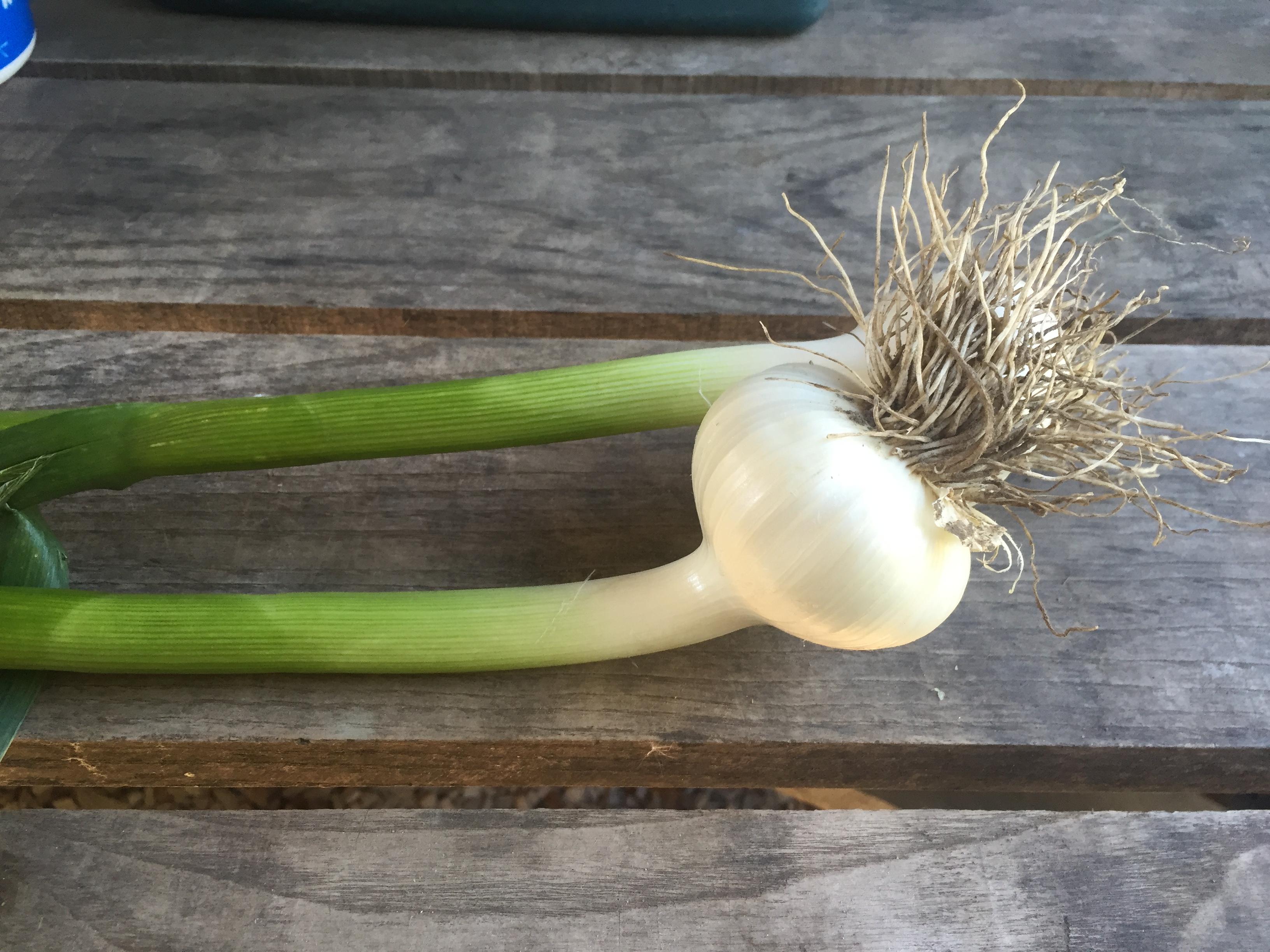
The garlic harvest

This week we harvested all the garlic that we planted last fall. It looks beautiful! It has turned into the ‘Orchard Hill Blend’ of garlic varieties – a few that we got from other farmers years ago, one smuggled from Italy by a garden member (not condoned!). Each year we save the very best heads of garlic to divide into cloves and plant in the fall. In this way, we have tailored the garlic that grows best in our particular micro region, and have produced some really lovely heads of garlic. We gather it in bundles and hang it in the eaves of the barn to dry and cure before cleaning it. When it is thoroughly dry, we can braid it or cut it off and store it for the winter. The garlic that you got in your share last week was fresh, meaning it wasn’t cured, and won’t store for months like the cured ones.

We have what might be the most beautiful watermelon harvest ever (per Martha) – they loved that hot dry weather that we had earlier in the season! You’ll notice that the watermelons that we grow are smaller than the ones you’ll typically find in the big grocery stores, but that’s purposeful because then they are the perfect size for a couple of people, rather than having a huge melon that sits in your fridge. You’ll also find that the melons are all different colours inside – yellow, pink, and orange. In the next few weeks you’ll receive a few different types of melons.

IMG_5156
Here’s the ‘before’ picture of the mid season brassicas – possibly the worst, weediest EVER.

Florence the orphan calf is doing well – but she’s a fence breaker! She won’t stay in the electric fence. We tried putting her in with the chickens, but she tried to escape from there too. So she’s stuck in the green round pen. Each night Bryan takes her for a walk on a rope. Last night he took her down to the other end of the farm to try and make friends with the runaway beef cow (nicknamed Houdini). Some of you may remember that Houdini escaped from the pasture at the other end of the farm on the day of the very first pick up – we thought that she would get eaten by coyotes and we searched and searched for her – but she’s still alive! She’s just a wild cow that we can’t catch – she’s bigger now, too big to tackle. She hangs out in the swamp and we see her every once and a while, and try to corral her into the pasture, but then she just jumps through the fence again! The theme of the summer is weeds and runaway cattle.

Here are a few notes and recipes for some of the vegetables that you’ve been getting!

Eggplant

What a versatile vegetable! It goes Asian, Italian, or French, it melds beautifully with almost any flavor that you can throw at it. A lot of recipes call for salting slices of eggplant (slicing it, sprinkling it with salt, letting it sit and drying it off) – this serves two purposes – 1. Drawing out excess moisture so that it won’t have as much water and 2. Helping to mitigate the ‘bitter’ flavor. In my experience, if your eggplant is fresh, not over-mature, and cooked properly, bitterness isn’t a problem. And if they’re eggplant from your share – you don’t have to worry about it. It’s also easy to cook because you can’t overcook it! It tastes most delicious (in my opinion) when it’s charred on the outside.

Simple Roasted Eggplant

1 eggplant

2 Tablespoon olive oil

½ tsp salt

White pepper (or black), ground

Preheat the oven to 400˚

Pierce the outside of a whole eggplant with a fork.

Throw it in the oven on a baking sheet and bake for 45 minutes or an hour, until the skin is blistered and it looks shriveled and completely soft.

Take it out of the oven and let it cool 10 min. Cut it in half and scoop the soft innards out of the skin into a bowl. Add the olive oil, salt and a little pepper and mix well.

Serve on toast, toss with pasta (add some garlic and chopped tomatoes), or throw it in a burrito.

Baba ganoush variation – add a clove of crushed garlic, 1-2 Tablespoons tahini and 1-2 Tablespoons lemon juice.

IMG_4844
Blackened Eggplant

Simple Grilled (Blackened) Eggplant

1 eggplant

2 Tablespoons olive oil

½ tsp salt

Black pepper, ground

Slice the eggplant in inch thick slices, lay out on a baking sheet and brush with olive oil on one side. Sprinkle that same side with salt and pepper.

Preheat the grill on high heat for 10 minutes.

Throw the eggplant on, oiled side down, and don’t move it or fuss with it. Cook for 10 minutes on high with the lid closed. Don’t turn it over, cook it just on one side. When it’s done, you should be able to see the top side bubbling a little bit and the bottom will be almost black. Use tongs or a metal spatula to take the eggplant off the grill. Don’t worry! It’s not burned, it’s ‘blackened’! And it’s the most delicious thing ever – the eggplant is earthy and smoky, suddenly more than just a vegetable.

Blitz it in the food processor to use for the baba ganoush (above), use in an eggplant parmesan recipe, or eat it as is!


Soba Noodles with Eggplant and Mango

This recipe is from the cookbook ‘Plenty’ – it’s an incredible vegetable cookery book with tons of interesting combinations of flavours, leaning in the middle-eastern direction. There are a lot of eggplant recipes. This one sounds crazy, but it’s actually really, really good.

Serves 6

½ C rice vinegar

3 Tbsp sugar

½ tsp salt

2 garlic cloves, crushed

½ fresh chile, seeds removed, finely chopped

1 tsp toasted sesame oil

grated zest and juice of one lime

2 eggplants – cooked (follow Blackened Eggplant recipe, above) and chopped

8-9 oz buckwheat soba noodles

1 large mango, cut into ½ inch dice

1 C basil or thai basil leaves, chopped

2 C cilantro leaves, chopped

½ red onion, very thinly sliced


In a small saucepan gently warm the vinegar, sugar and salt for up to 1 minute just until the sugar dissolves. Remove from the heat and add the garlic, chile pepper and sesame oil. Allow to cool, then add the lime zest and juice.

Cook the soba noodles in plenty of salted water, stirring occasionally. They should take 5-8 min to become tender but still al dente. Drain and rinse well under running cold water. Shake off as much of the excess water as possible, then leave to dry on a dish towel.

In a mixing bowl toss the noodles with the dressing, mango, eggplant, half of the herbs and the onion. You can now leave this aside for 1-2 hours. When ready to serve add the rest of the herbs and mix well, then pile on a plate or in a bowl.


Parsley

We have more than a row (320 ft!) of Italian flat leaf parsley this year, because I love it! I.must.always.have.parsley. It’s one of my staples – in the winter it substitutes for salad greens when all the things in the grocery store are flaccid things from California, and in summer it gets chopped up in almost every grain, bean or vegetable salad. But it seems to be languishing in the pickup room. I think flat parsley is far superior to curly parsley because it doesn’t tickle my mouth. I could come up with a few more reasons – it doesn’t hold the dirt so stubbornly, it looks more elegant when finely chopped, and I think the flavor is less bitter and more fragrant than curly parsley. All that being said, they are pretty much interchangeable in recipes.

It’s also a nutritional powerhouse! It’s packed full of all kinds of things I’ve barley heard of (volatile compounds) as well as Vitamin K, C, and A.

Parsley is best fresh or barely cooked, and will store well for a week or more, if stored loose in a plastic bag in the refrigerator.


Parsley Pesto

1 C flat leaf parsley leaves (from one big bunch)

2 cloves garlic

1 cup olive oil

large pinch salt

6-8 turns of white pepper (or black)

Remove the leaves from the stem of the parsley – you don’t have to be too picky because it’s going to be blended up, but too many stems won’t make a nice pesto. Combine all the ingredients in a blender or food processor. Puree until it’s a texture that you like. Taste and adjust as necessary. Store in a covered container in the fridge for up to a week. Shake or stir well before using.

Brush on bread before toasting for a crostini (aka bruschetta), add to any soup just before serving, use in a pasta sauce at the last minute. Also great tossed with any grilled vegetable hot off the grill (i.e. peppers, zucchini, eggplant, carrots).


Green Gazpacho

Another one from ‘Plenty’ – it’s a chilled soup, super fast and easy to make, fantastic on a hot day, and a great way to use up some of those cucumbers. It’s great served with croutons and a drizzle of olive oil. Serves 6

2 stalks celery (leaves too)

2 small green peppers, seeded

1 ¼ lbs cucumber (6 small or 2-3 large)

3 slices stale white bread, no crusts

1 fresh green chile (like jalapeno)

4 garlic cloves

1 tsp sugar

1 ½ C walnuts, lightly toasted

6 C baby spinach (or 4 C swiss chard)

1 C basil leaves

2 Tbsp chopped parsley

4 Tbsp sherry vinegar (red wine vin in a pinch)

1 C olive oil

3 Tbsp greek yogurt

about 2 C water

1 C ice cubes

2 tsp salt

white pepper

Roughly chop the celery, bell peppers, cucumbers, bread, chile and garlic. Place in a blender and add the sugar, walnuts, spinach, basil, parsley, vinegar, oil, yogurt, most of the water, half the ice cubes, the salt and some white pepper.  Blend the soup until smooth. Add more water if needed to get your preferred consistency. Taste the soup and adjust the seasoning. Lastly, add the remaining ice and pulse once or twice, just to crush it a little. Serve at once.


Heidi cultimulchingAn introductory, housekeeping item – it’s Ellen behind the keyboard here. I have taken over managing the blog, facebook page and instagram account. Martha will occasionally post something, but we thought that you might like to know who you’re reading.

One of things I love about farming and living a life that is so seasonal is that patterns start to emerge between events, plants and animals, sometimes seemingly otherwise unrelated. The other day I mentioned that Home County Music Festival was coming up to my mom and she said ‘oh, that means we need to put the electric fence up around the sweet corn’ (to keep the raccoons out), because she remembers the past few years, rushing around to get that done before going to the music festival.

2016 is shaping up to be the year of the weeds! Some combination of no-till cover crops, lack of rain, and who knows what has created the highest weed pressure of any year that my parents can remember. Upside – you get to feel like a superhero, swooping in to save the poor plants from certain doom in the pigweed jungle. Every 2 weeks. Downside – it feels like there’s no time to do anything but weed. It has such an effect that we have decided to change the location of the 2017 garden – there were so many weeds coming up in the field destined for vegetables that we have switched it up and it will now be planted to buckwheat (and a few more cover crops).

The garlic should be ready to harvest in the next week or two and it looks glorious! The heads are big and IMG_4562beautiful. The cucumbers are getting off to a slow start because Martha went to a seminar this winter and came away with recommendations for cucumber varieties, and also the idea that cucumbers shouldn’t be transplanted because it sets them back too much – best to just get them in the soil sooner (in a hoop house). Sounds great! However, only 5-10% of the expensive, special cucumber seed germinated. So we replanted and those plants are coming along and we will have lots of cucumbers in a month or so….and in other good news, tomatoes, peppers and melons love all this hot dry weather, so they should be bountiful.

0I6A2662-editFlorence the calf is doing well. She guzzles her milk each day, three times a day. Bryan takes her for a walk most evenings and she loves to suck on fingers (or hands, or baby feet!). We have brought in almost all the first cut hay now – it’s been great haying weather!

The multigenerational family farm operation is going well so far – it’s a challenge to get as much done as you think you will with small children in the mix (or it looms large from my perspective perhaps). But it’s very special to me to see the relationship develop between my parents and my children – and their relationship with my grandmother! She’s come a few times to help keep an eye on the children while we keep on top of stocking the pick up room. But it’s also interesting and heart tugging to see Della develop a relationship with the plants and animals that I spent so much time with when I was a child – making flower crowns with spring beauties, following toads, making forts for worms. Della in the blueberry bushesOr picking blueberries for everyone for dinner! Ken and Martha are starting to plan for a renovation of the bunkhouse – adding a kitchen and bathroom, and probably replacing all the walls – that’s all! They shall start their (semi) retirement in style next year.

Here are a few recipes from garden members –

Spinach Pesto & Artichoke Pasta Salad

From Vicki Coughlin (at Telegraph House in Port Stanley) –

I didn’t have the artichokes (omitted them) and used this recipe hot as a side dish for dinner, and thought it was a brilliant way to use fresh organic spinach from Orchard Hill! (farmer note – it would also be delicious with swiss chard!)

250 g fusilli

1 garlic clove

2 cups packed spinach

1/4 cup toasted sliced almonds

1/4 cup parmesan

1 tablespoon lemon juice

1/4 tsp salt

1/3 cup olive oil

1/4 cup 2% plain yogurt

398 -ml can artichoke hearts, drained and chopped.


  1. Cook pasta following package directions, but omitting salt, until tender. (Drain & rinse with cold water if making salad)
  1. Whirl garlic clove with spinach, almonds, parmesan, lemon juice and salt in a food processor until finely chopped.  Gradually whirl in oil until smooth.
  1. Combine pesto with yogurt in a large bowl.  Stir in pasta and artichokes if using.

Chia Fruit Jam

From Jackie Martens –

This is very quick and easy to make and I have made this with Mulberries, Strawberries, Raspberries, and Strawberries with Rhubarb.

1 cup fresh or frozen fruit, cut up small

3 tbsp chia seeds

2 tbsp organic maple syrup (or other sweetener like honey or agave)

4 tbsp water

(If using Rhubarb, I soften it a bit first by boiling it in the 4 tbsp of water.)

Mix together all ingredients.
Transfer the mixture into a saucepan and cook on med-low heat for 4-5 minutes until jam sets.
Transfer to a jam jar and enjoy on yogurt, toast, crackers, with salad or use as a topping for scones or other slices.
Store in the fridge for up to 7 days.