March 31, Going out like a Lion!
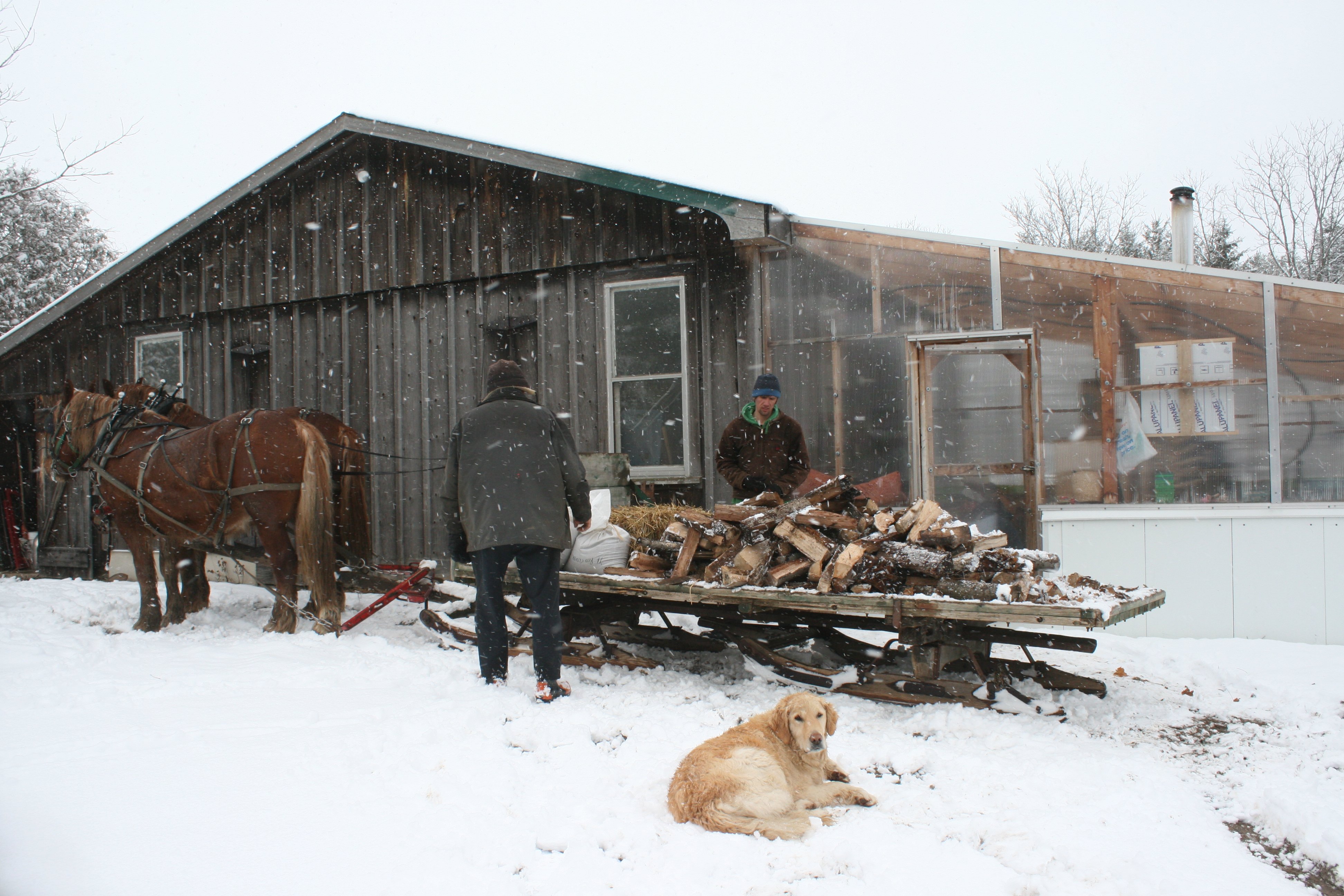
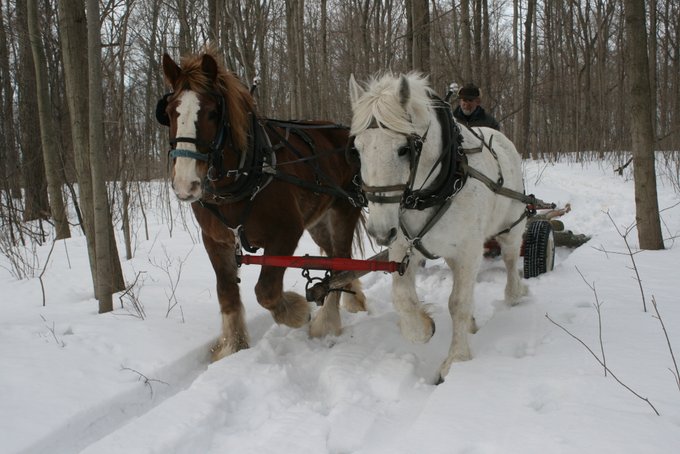
March 31,Taking the Sleigh out on Fresh Snow with Suffolk Horses

March seems to be “going out like a lion” with snow coming down fast and covering everything again. Fortunately, from the looks of the forecast, it won’t be around for long. On the up side it provides a nice opportunity for top seeding with grass seed over our fall planted grains. The snow helps us see where we have spread the seed with the last pass allowing for even seed distribution. It also helps plant the small seeds to germinate when the snow melts.
Naomi Martz
Naomi Martz
Aden Spurr
Aden Spurr

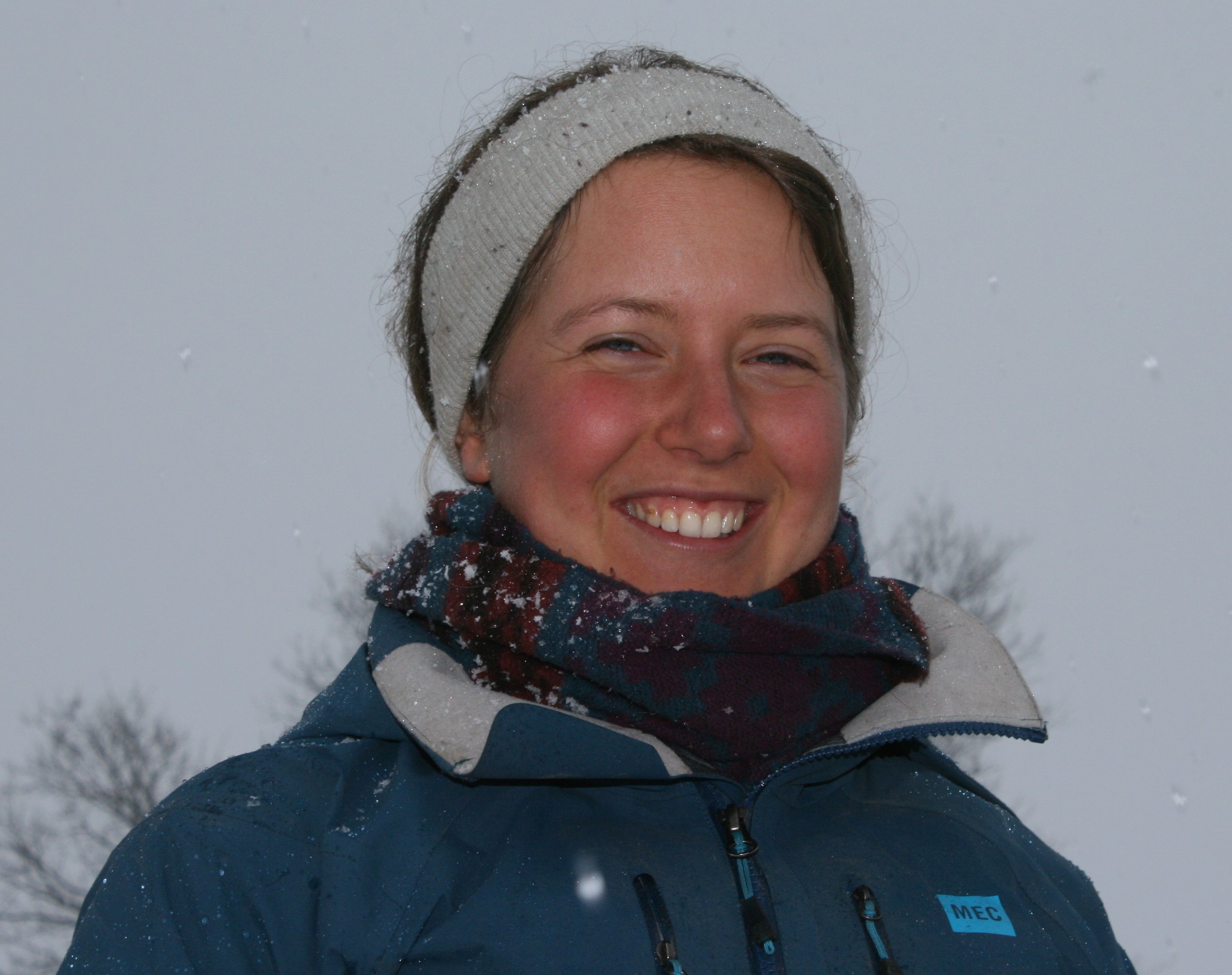
The first of our apprentices have arrived. Naomi Martz is from B. C. She has already apprenticed on a number of farms and is here to learn our methods with a particular focus on the draft horses. Aden Spurr is originally from a farm in Ontario, but also spent time in B. C. working as a glass blower for seven years. Last year, he apprenticed at Meeting Place Organic Farm using their draft horses and is now interested in honing his teamster skills and learning about CSA farming. Naomi and Aden will be with us for the season.

Rose Bramwell
Rose Bramwell

Rose Bramwell is a horse enthusiast, visiting from Scotland. She will be here for a few weeks now and again in the fall. She is expecting to do some other travelling during the summer months.

Naomi and Rose Making Sauerkraut and Kimchi
Greenhouse Plants
Greenhouse Plants

It is always a boost to have such fine young people with energy and enthusiasm join us on the farm this time of year. Some years we are already on the land planting by this time. This year, we are still waiting for the snow to go and the ground to thaw. However, there is always firewood to cut and split and some greenhouse work to be done. The greenhouse plants are growing well and the early head lettuce and pac choi transplants for the hoop houses are ready. Now we just need to have the ground thaw so we can move our hoop houses and get the transplants in the ground! We have also enjoyed having time to use up some of our winter stores making kimchi and sauerkraut.

JIm - Painting no-till planter frame.
JIm – Painting no-till planter frame.

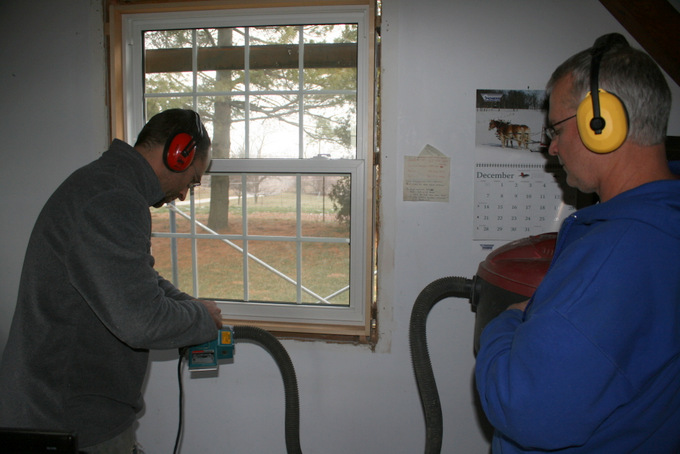
Ken and Jim have been working in the shop building a prototype for a horse drawn no-till drill. It is quite challenging to assemble parts from various sources and to fit and weld it all together. Jim has been keeping up with the sanding and painting along the way.

Our CSA membership is gradually filling up. There are still shares available. We are welcoming new members as well as past members to join for the 2015 CSA season.

We now have and Orchard Hill Farm Facebook page and “Martha Laing – Tweets” – (See Links We Like on side bar if you would like to follow the updates.)

No-till Planter Parts
Making Kimchi
Making Kimchi
Taking Wood into Greenhouse to Keep the Wood Stove Going
Sleigh Full of Firewood for Greenhouse

Martha taking in Lake Erie ice on March 12th!

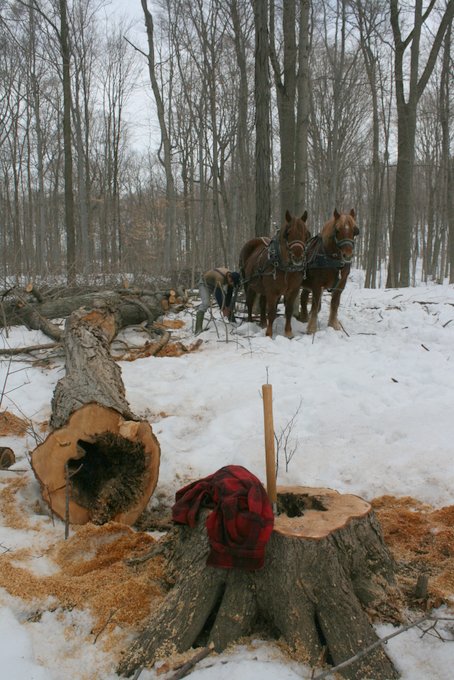
The spring melt has started. Although, there is still lots of snow in the fields and woods it is gradually receding. I managed to get away yesterday, for a look at the Lake Erie ice, before it all melts. It is quite awe inspiring!  The snow and ice on the greenhouse roof has melted away and the first seedlings are popping up. Ken has been spending his time divided between working in the shop on his no-till planter, with the help of Jim,  and cutting firewood and logs. He and Bill are skidding logs out of the woods today, with the draft horses. The snow is still deep, but once the path is broken it is good to have the snow for the logs to slide on because it helps to keep them clean of dirt. Clean logs mean there will be much less need to sharped the chainsaw and sawmill blades when they are cut up into firewood and lumber! Work in the woods helps to get both the farmers and the horses in shape for the spring field work soon to come.

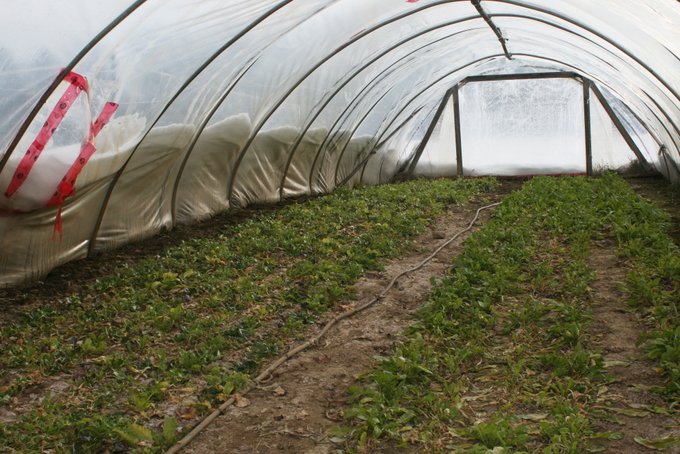
Every day a few more CSA applications arrive in the mail, but we still have shares available for the 2015 CSA season. It is encouraging to peek inside our hoop houses and see signs of life. I had wondered if, with all the extremely cold weather, all the plants would be dead. We will be moving some of our hoop houses and planting them for the first CSA pick-ups in another month. It is a bit hard to believe, when I still see all the snow!

Snow Gradually Receding
Snow and Ice Gone from Greenhouse Roof
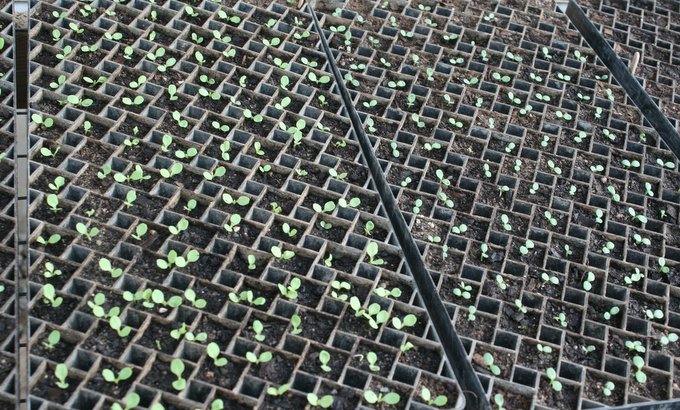
Head Lettuce to Plant in Hoop Houses in April has Come Up
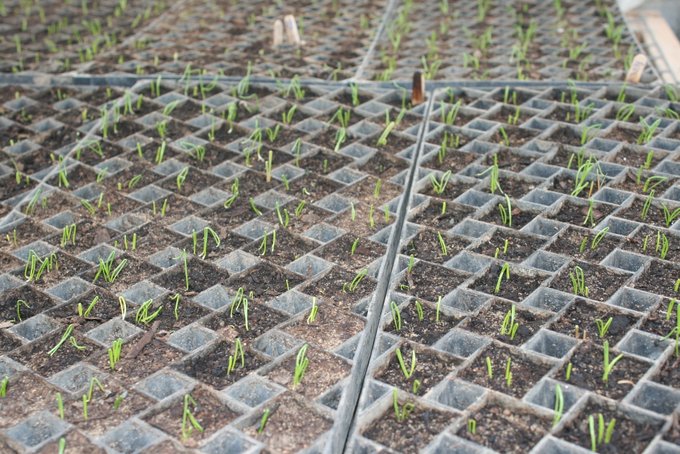
Baby Onoins are Coming Up Too
Firewood Log
Firewood Log
Suffolk Horses Hauling Logs out to Pathways
Bill with Suffolk Horses Buttons and Gwen Hauling Logs out to Pathways
Queen and Ned Skidding Logs
Signs of Hope inside of Hoop House!

Greenhouse before the wood stove is started...
Greenhouse before the wood stove is started…
Mixing up Potting Soil in Greenhouse
New Incubation Chamber for Seedlings

It is truly a leap of faith, when I start the greenhouse with early seedlings when the nights are still going down to -25 degrees Celsius and the greenhouse roof is covered with a thick layer of snow and ice. After a few days of heating, the snow is gradually receding off the roof and the rock heat sink is slowly heating up again. I have a fan to blow the hot air down into the rocks in the daytime. Ken and Jim built a new incubation chamber for starting the seedlings. Mixing up the potting soil, filling the seedling trays and carefully counting out the number of seeds into each cell has taken most of my time this week. Now I am eagerly awaiting the emergence of the first signs of life!

Free Range Laying Hens Venturing out Into the Snow!

The “free range” chickens have been peeking out, enjoying the warm sunshine, but they usually don’t venture too far from the chicken coop in the snow. One made it out to the cedar hedge, behind our house, and called to me in the evening when I went out to shut the chicken door on the coop. She hadn’t found her way back. I had to wade through heavy snow sinking up to my thighs to retrieve her and carry her back to the coop to be tucked in for the night. After their winter holiday from laying we are now getting a few eggs every day from our hens.

Suffolk Punch Draft Horses Happy on a Snowy Day

Our Suffolk Punch horses are happy in the snow with their warm winter coats. Snow is always better than mud for the horses in the winter. Hopefully, once it warms up the snow will all melt in a hurry and it and dry up without too much mud! The warmth in the radiant spring sunshine is always enjoyed by the horses too. Ken has started cutting some lumber and firewood. He has hauled the logs out of the woods with the draft horses, but the snow is so deep this year that it is difficult for the horses to get through the trails in the woods.

Ken busy in his workshop building the next no-till implement...
Ken busy in his workshop building the next no-till implement…

Ken has also been busy building another horse drawn no-till planter for field crops. It will be a special small model so the draft horses can pull it. He has salvaged some parts from a tractor no-till implement and is having fun putting it all together. This spring he will give it a test and see if the parts all work as planned. He has until June to get it into working order.

We are looking forward to the arrival of our first interns the end of the month. CSA applications are coming in every day in anticipation of another growing season.  We still have lots of spots to fill before our first pick-up in the second half of May. The first head lettuce seeds for transplants into the hoop houses to provide head lettuce for the first CSA pick-up are already planted and so it begins…

Greenhouse with Snow and Ice Receding
Thanksgiving Dinner Last October with Brandon, Caitlin and Jayme.
Thanksgiving Dinner Last October with Suffolks, Jayme, Brandon, Caitlin and of course Caesar.
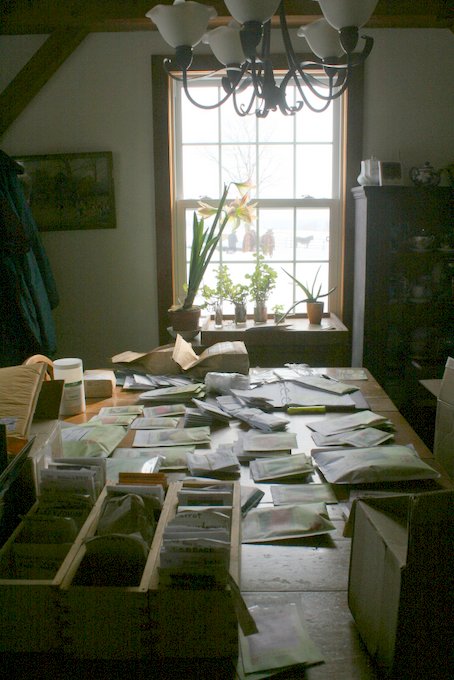
Sorting out the Seeds for this Year's  Season
Sorting out the Seeds for this Year’s Season – (Horses being hitched outside the window)

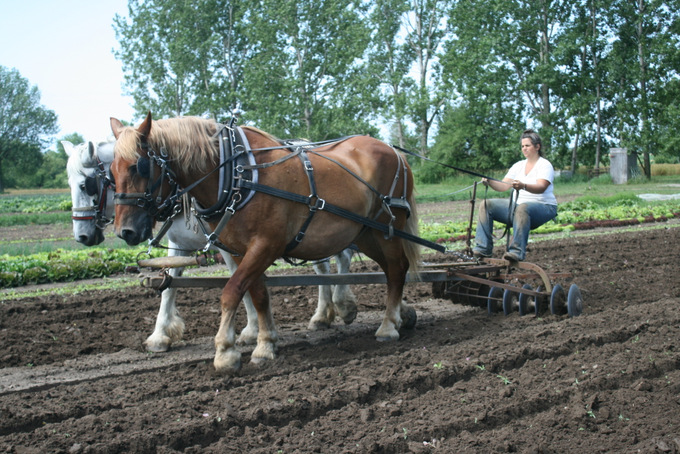
Gena Discing last summer with Jayme Fowler driving.

Our sad news is that we lost our oldest Suffolk horse, Gena, this winter. She had been having difficulty with her back legs and sometimes had trouble getting up after she laid down. This time round we couldn’t get her up again. I find the hardest thing about working with horses is not the chores or harnessing or training it is the sadness when they die. Gena was born on our farm and was a hard and willing worker her whole life. She was always patient with our apprentices and draft horse workshop participants.

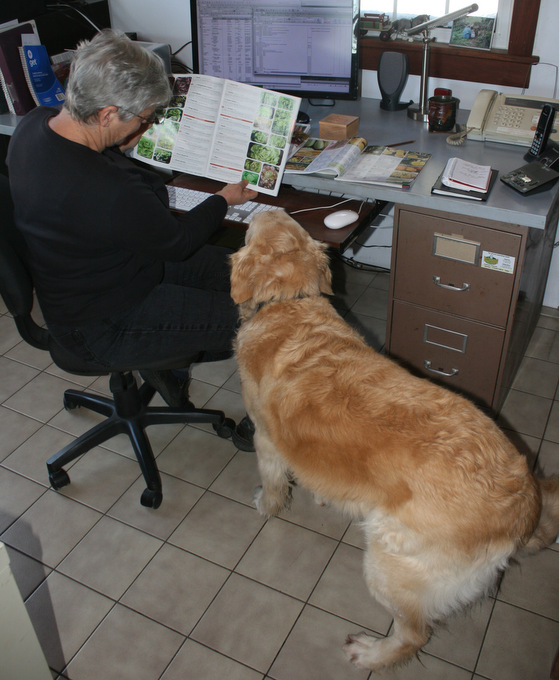
On other fronts – The new downstairs windows were installed just before New Years. We were grateful for help from Jim and Bill with the job. The windows had been waiting in our attic to go in since the spring of 2013. Needless to say I am very pleased. We have a new flour mill with pink granite stones to grind our OHF grains into flour. We are hoping that it will be more efficient for the horse powered tread mill to drive. Ken will also be able to dress the stones to sharpen them when they become dull. I have been growing some pea shoots for our winter salads. It is encouraging to see the green in our south window during this snowy winter. Caesar and I have finished the annual CSA garden plan, seed order and greenhouse schedule. I used the computer this year with Excel spread sheets and ordered “on-line”. Ken has been busy making a new zone till implement with the good help of Jim Conrad, who has continued to come out to the farm to help out one day/week throughout the winter. See Ken’s explanation of why he is interested in zone tillage below.

Grayden has another video ready of the maiden try of our new root washer.

New Zone Tillage Implement

Converging Trends & Soil Management at Orchard Hill Farm by Ken Laing

Periodically things that have developed rather independently converge to create a revolution in the way we think and act. In organic agriculture we are at one of those points in our development where we are approaching a paradigm shift in our approach to soil /crop management.

Organic agriculture for many of us was a large step forward giving more credit to the biology in the soil (but without really understanding why or how it functioned), eliminating the use of synthetic pesticides and fertilizers that could be toxic to plants and soil life and incorporating cover crops to reduce soil erosion, soak up left over nutrients and add organic matter. But this new approach to agriculture left us very dependent on tillage when preparing to plant a cash crop or cover crop and for weed control in row crops. Our brothers and sisters in conventional agriculture at the same time embraced no-till planting as a way to reduce tillage and fuels costs, but were left very dependent on herbicides for weed control and other pesticides for disease and insect control. Here at OHF cover crops have played an increasing role at improving our weed control, holding nutrients over, adding organic matter and reducing soil erosion. We have reached the goal of leaving almost no soil bare over the winter or for long periods in the other three seasons. However, we still use tillage to prepare the soil to plant the cover crop and terminate it to get ready for the next crop. Why is tillage so detrimental? It has to do with its impact on life in the soil. Fungi are a very essential part of that web of life in the soil that help our crop plants access nutrients and water and avoid disease. Fungi build carbon levels in the soil, which is the food source for other biology. They also build soil aggregates that gives a healthy soil room to breathe and have the ability to hold more water. Fungi do not tolerate frequent tillage. It breaks up the hyphae (the branching structure that makes up the fungus). Thus the intensive tillage required to grow organic vegetables is preventing organic farmers from having healthier soils. We can offset this somewhat by growing cover crops, using compost, specific biological foods (such as molasses, kelp, liquid fish, humates) and inoculants.

The last few years have seen some quantum leaps in our understanding of soil life and its impact on crops. People like Elaine, Ingam, Ray Archuleta and Jill Clapperton are helping both organic and conventional farmers appreciate and understand the life in the soil and how critical it is to enable and not impede or destroy soil life. There are more individual organisms in a handful of soil than all the humans on this earth. These organisms all have a role to play in creating and maintaining healthy soil and clean air and water. Our health and the health of the planet begins with healthy soils.

Another part of the puzzle is integrating livestock into the system. Not only can livestock enable us to produce meat and draft power from land that is too steep, stony, droughty or wet to grow crops but they can also be integrated into the cropping system to produce compost, terminate cover crops and boost microbial life through their feces and urine.They can also control weeds and brush. Thanks, in a large part, to Holistic Management we now understand how to manage grazing animals very intensively to benefit the forage crops and the soil health. Unfortunately many organic farms do not have livestock because of the extra management, infrastructure (fences, barns etc.) and marketing required. At OHF the bulk of our livestock are horses which can be challenging to manage on pasture and they spend much of their days working during the pasture season.

We are at a crossroads in agriculture as we appreciate the vital role of soil life and particularly fungi, we organic farmers need to move toward no-till. Remember those of us with forests, permanent pastures and long term hay fields and orchards already utilize no-till in these areas. We also need to integrate more cover crops into our field crops and vegetable crops and learn how to seed them and terminate them with no-till techniques.

For those who are interested in reading more start your Google search with: no-till vegetables; Ron Morse; Ray Weil; Natalie Lounsbury; Steve Groff; Gabe Brown and Dave Brandt .

Of course here at Orchard Hill Farm we have the extra challenge of no-till planting with drafthorse power. No-till equipment is mostly too large and all of it is very heavy and very expensive. Not to be left behind we have already built an implement, which will allow us to plant seeds into a winter killed cover crop of oats/barley/peas. This implement is called a zone tiller because it sweeps aside the dead residue and tills a narrow band of soil 6-8” wide into which we can plant some of our early crops like spinach, carrots and radishes. Yes, we will have to come back and row cultivate for weed control but we have avoided some field wide tillage and the tillage for weed control tends to be more shallow. We are also planning some cover crops strategies, which will hopefully enable us to plant more crops with no-till or zone till techniques.

Bill and Jim helping to install new windows!
Inside pink granite mill stone on new flour mill.
Martha and Caesar ordering 2015 CSA garden seeds.
Growing Pea shoots for winter salad.

The Fall CSA ended well with the last pick-up on December 6th. Many thanks to CSA members: Kathy Ellis, Jim Conrad and Claire Wells,  who helped me pull together the last pick-up. Ken and Grayden were away at the Ecological Farmer Association of Ontario Conference near Berrie, Ontario. Ken gave a workshop at the conference on our Horse-powered CSA. Grayden used his videography skills to make several short videos of some of the machinery Ken has adapted for our operation. I have linked to them here for viewing.


We also now have an Orchard Hill Farm Facebook Page:

https://www.facebook.com/orchardhillfarmontario

The farming year always seems to end for me with mulching the strawberries. This year is we managed to do the mulching without snow!

Mulching Strawberries

Here are a couple of yummy soups to try over the holidays:
Kale – Sausage – Bean Soup – serves 5-6

500 grams sausage – cup up

1 onion, diced

1 clove garlic, minced

2 tsp chilli pepper

2 tablespoons tomato paste

4 cups vegetable or chicken broth

2 cups white beans, drained and rinsed

2 cups packed and chopped kale

1/4 cup lime juice

In large pot stir/fry sausage until cooked. Add onion, garlic, chilli powder and tomato paste. cook until onions start to soften 2-3 minutes.

Add Broth and 2 cups of water. Bring to a boil. Add beans and kale. Cook over medium heat about 5 minutes. Stir in lime just before serving.

Squash – Carrot Soup – serves 6

1 medium onion, chopped

3 medium carrots, peeled and chopped

5 cups squash, peeled, seeded and chopped

1 apple, peeled and chopped

3 1/2 cups vegetable broth

1/2 teaspoon ground cinnamon

1/4 teaspoon groung nutmeg

1 tablespoons maple syrup

Salt and pepper, to taste

Add the onions, carrots, squash and apple to a pot or slow cooker, Pour vegetable broth over all ingredients, Cook on low heat until soft.  Puree the soup. Add cinnamon, nutmeg and maple syrup.

Season with salt and pepper to taste.


We finished picking and husking the last of the field corn yesterday on the windiest day of the year! The wind had blown down many of the stalks and the horses were uneasy standing with the wagon, while we picked, but it is good to have it done and the new corn crib looks great!

Jim Adding the Last Two Ears of Corn to the New Corn Crib.

Cut Leek Lengthwise and Wash Away Dirt Between Layers.

Celeriac is such an ugly looking vegetable that many people are scared of it, but it is a wonderful addition to the soup pot. I would like to share a recipe adapted from a new cookbook, Roots by Diane Morgan. I found the “bouquet garni” adds a very nice flavour to the soup. The easiest way to clean a leek is to cut it lengthwise and then wash away the dirt from between the layers under running tap water.

CREAM OF CELERY (Celeriac) ROOT & LEEK SOUP

10 pepper corns

1 bay leaf

4 fresh flat-leaf parsley sprigs

4 fresh thyme sprigs

2 tbsp butter

1 large leek – white and light green part only, halved lengthwise and thinly sliced

1 large garlic clove, minced

4 cups water

1 large celery root, trimmed, peeled and cut into ½-inch cubes

2 tsp kosher or fine sea salt

¼ tsp freshly ground pepper

1/3 cup whipping cream

¼ cup crème fraîche , sour cream or yogurt

2 tbsp finely snipped fresh chives

1) Cut an 8 inch square of cheesecloth and place the peppercorns, bay leaf, parsley, and thyme in the center. Bring the edges to form a bag and tie securely with kitchen twine to make a bouquet garni, Set aside.

2) In a 4- to 6b qt. saucepan, melt the butter over medium heat and swirl to coat the pan bottom. Add the leek and cook, stirring occasionally, until softened, 6 to 98 minutes. Add the garlic and cook for 1 minute more. Add the water, celery root, salt, pepper, and bouquet garni and bring to a boil. Reduce the heat to a simmer and cook uncovered, until the celery root is tender when pierced with a knife, about 20 minutes. Remove from the heat and let cool for a bout 10 minutes.

3) Discard the bouquet garni. Working in batches, puree the soup in a blender or food processor. Return the pureed soup to the saucepan, place over low heat, and add the cream. Warm the soup until steaming hot. Do not allow it to boil. Taste and adjust the seasoning. (The soup can be prepared up to 3 days in advance. Let cool, transfer to a covered container, and refrigerate. Rewarm over low heat just before serving.

4 Ladle the soup into warmed bowls. Garnish each bowl with a dollop of crème fraîche, sour cream or yogurt and a pinch of chives. Serve immediately.

Giant Winter Kohlrabi


Picking Kale in the Snow!

We are getting ready for the 3rd Fall CSA Pick-Up. Fortunately we spent the better part of last week digging root crops and washing them before instant winter descended! We left some crops in the field and wonder if they will survive under the snow. We had winter kohlrabi this year that grew to be giant in size. Last year I thought it was a bit small and planted it earlier this year. Perhaps I went too far in the other direction. I was able to harvest kale out of the snow and it looks fine. We picked our first greens from the hoop house today. I am always amazed  by how the small greens can grow so nicely in an unheated hoop house. It seems so special to be able to pick them when there is snow outside.

Bill with his Ears of Corn
Heading Up with the Afternoon's Picking
Heading Up with the Afternoon’s Picking

I decided to try and grow some field corn for cornmeal in our CSA corn plot. I found a source of white open pollenated organic seed. Ken heard of growing white corn because if it cross pollenates with GMO corn the kernels would show up as yellow corn.  I ended up with more seed than I had asked for initially and as a result Ken decided to plant a bigger block of corn. We had to wait for it to dry down enough before we picked it and now the snow has come. Jim Conrad has been building a little corn crib to hold the cobs. This afternoon we headed down to start the picking job. It wasn’t too bad with five of us, but we only got about half of the plot picked when the sun was starting to go down. Jim is hoping for some cornbread. We will see what we can do about that once it dries down some more so that we can grind it in our mill powered by the horse treadmill.

Ecological Farmer’s of Ontario is having a conference the beginning of December and they were requesting 8×8 cake recipes and asked me for my parsnip cake. I have copied the recipe here.

Parsnip Cake Recipe for 8 x 8 inch pan from the kitchen of Martha Laing
1 cup granulated sugar
1 cup flour
1/2 teaspoon fine sea salt
1 1/2 teaspoon baking powder
1 tsp cinnamon
1 tsp ginger
3/4 cup sunflower oil
2 eggs
1 1/2 cups grated parsnips
1/4 cup chopped pecans or walnuts
1/4 cup crystallized ginger
Preheat oven to 350 degrees F.
Combine sugar, flour, salt, baking powder, cinnamon, ginger; beat in oil until mixture is light in colour, about 3 minutes.
Beat in eggs, one at a time, beating for about 30 seconds after each addition. Add parsnips, mixing thoroughly.
Spread in well-greased and floured 8 x 8 inch baking dish. Bake for 50 – 55 minutes or until tester inserted in centre comes out clean. Let cool in pan before spreading with Cream Cheese Frosting.
* Recipe can be doubled for a 9 x 13 inch pan recipe. It can also be doubled and divided between 3 – 9 inch round cake pans for a layered cake. For a fancy cake, I put caramelized apples between the layers and add crystallized ginger pieces to the cream cheese icing.
Cream Cheese Icing for 8 x8 inch pan
8 oz cream cheese, softened
1/2  cup butter, softened
1 cup icing sugar, sifted
Milk
In mixing bowl, beat together cream cheese and butter, add enough milk to make fluffy spreadable consistency.  Double recipe for layer cake.
Caramelized Apples for filling between layers of fancy cake
6 tablespoons butter
1/3 cup sugar
2 pounds Golden Delicious or Honey Crisp apples(or other firm apple variety), peeled cored, cut into 1/2 inch slices.
2/3 cup whipping cream
Melt butter in large skillet over medium heat; cover with sugar. Stir until sugar begins to melt, about 1 minute. Add apples.  Cook until apples are brown and tender and juices form, about 10 – 15 minutes. Add cream and simmer until sauce thickens, about 5 minutes. Cool before assembling cake.
Jim Picking Field Corn
Clay Moving the Suffolk Horses and Wagon Ahead
Clay Moving the Wagon Ahead
Grayden Picking Field Corn

Kailea and Andy
Kailea and Andy

Ken and I had a wonderful break away from the farm between the end of our Main Season CSA and the beginning of our Fall CSA. We were privileged to attend the beautiful wedding of Kailea MacGillivary and Andy Pedley in Cape Breton. Andy apprenticed here at Orchard Hill Farm in 2010 and 2011. We were also able to visit two other farms, Olde MacKenzie Farm in PEI and Broadfork Farm in Nova Scotia. Both relatively new farms growing produce with ties to Ontario, where we met the farmers originally. It was fun to visit another part of the country and see other similar operations. We came home feeling blessed to have good land to farm and ready to dig in and harvest for our first Fall pick-up.

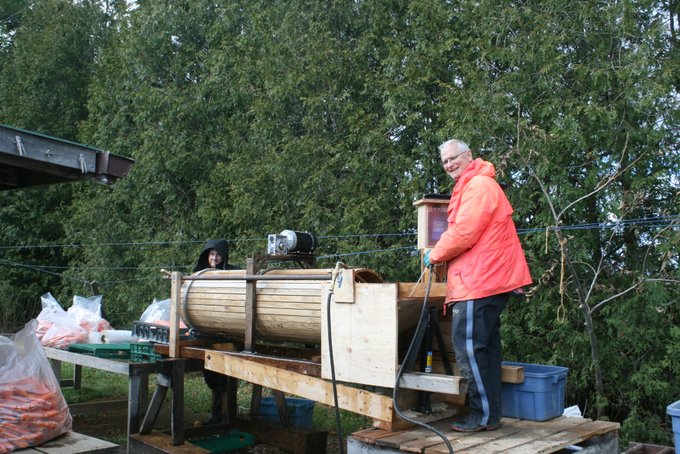
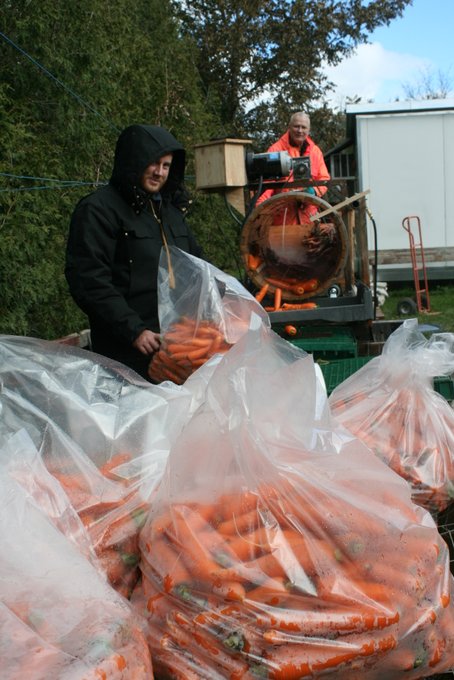
The digging has been made considerably easier with a our newest horse drawn implement, a Ken Laing manufactured Root Lifter. It is a U shaped bar that pulls along under root crops and loosens the soil around them to make them easy to pull out of the ground. What a help it is and time saver! Ken has also been busy in his shop making a barrel root washer and it was well tested yesterday and today washing potatoes, beets, carrots, parsnips and winter radish! I am thrilled to have both new additions to our line of equipment.

Root Lifter
Root Lifter
Root Lifter Blade
Root Lifter Blade
Jim and the New Barrel Washer
Jim and Clay and the New Barrel Washer
Clay and Jim Washing Carrots
Ken and Martha in Cape Breton

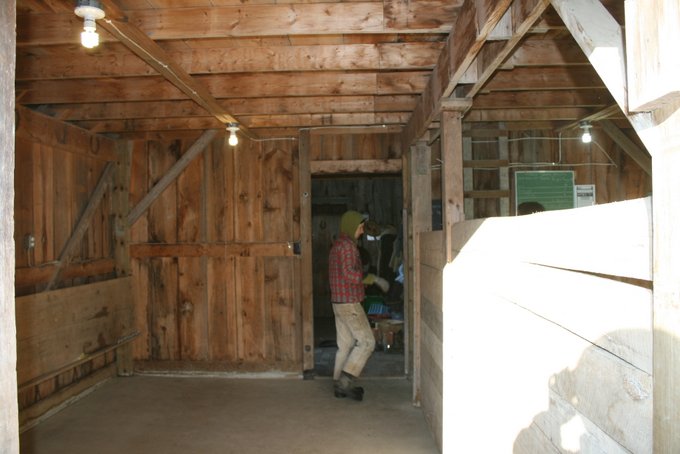
Pick-up Room Converted to a Woodshed

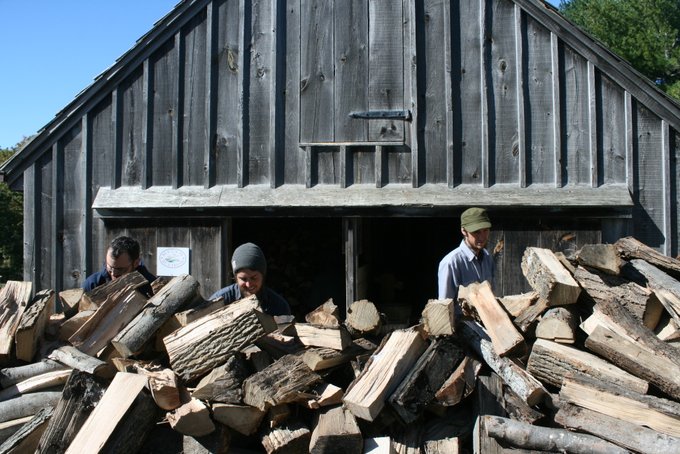
Filling Up the Woodshed for Winter

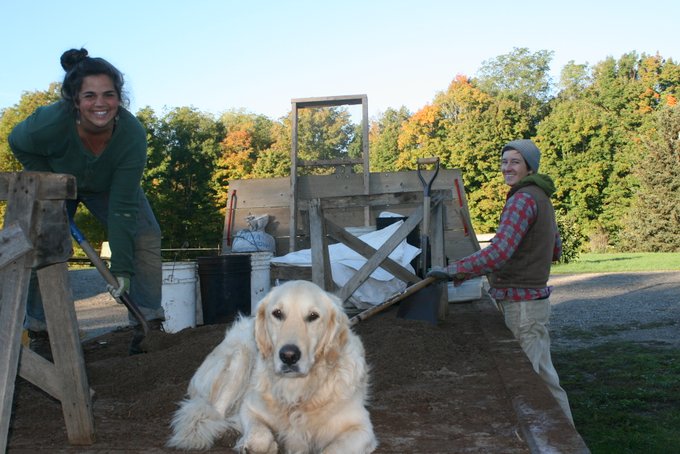
Jayme and Caitlin Making Potting Soil with Caesar Supervising
One job we like to do while the interns are still here is to convert our pick-up room back into a woodshed by putting the divider wall back in place and filling it up with wood. The potting soil is also being mixed up ready for the greenhouse transplants. It is sort of like making a big cake…sifting the pails, instead of cups, and them mixing them together. One of the requirements for organic production is to have potting soil with out chemical fertilizer. We use compost to add nutrients to the mix with a recipe adapted from Eliot Coleman’s book The New Organic Grower.
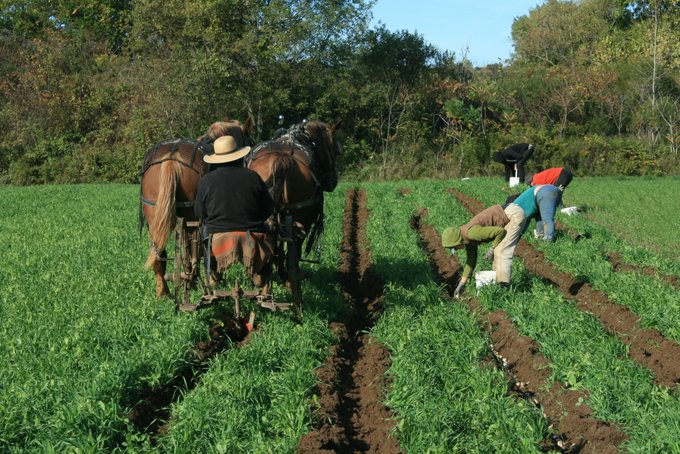
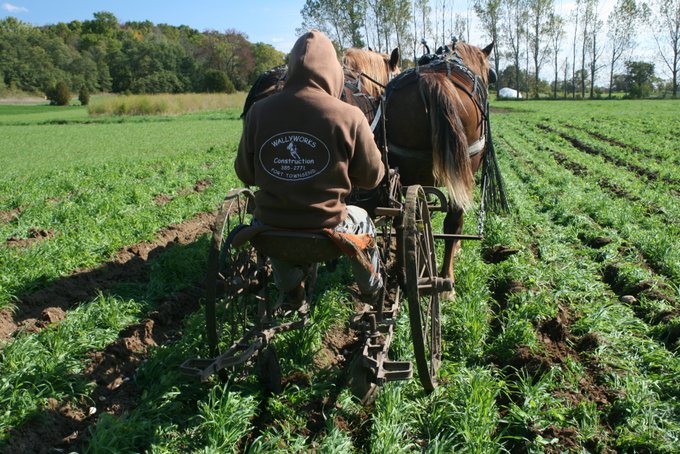
Early October and garlic planting always coincides with the end of the internships on the farm. We have to wait for dry weather and the golden October sun usually makes for a fun filled day. The interns are always pleasantly surprised at how easy and fun it is to plant our garlic. We prepare the ground during the summer and plant it to a cover crop of oats and peas in early September. The oats and peas cover the ground and grow into the late fall. They then winter kill and the garlic can grow up through the cover crop mulch in the spring. We open up a furrow with a row cultivator. The garlic cloves are placed 6 inches apart and then the furrow is closed in with a disc hiller pulled by the horses. We planted 5950 cloves of garlic in about 2 1/2 hours this morning with the help of our Suffolk Punch Horses.

We are very grateful for all the efforts of the apprentices throughout the season and wish them well with their future endeavours.

Planting Garlic
Planting Garlic
Brandon Covering Garlic UP with the Furrower
Brandon Covering Garlic with the Hilling Discs
Jayme's Turn
Jayme’s Turn
Caitlin with Suffolk Horses - Buttons and Gwen
Caitlin with Suffolk Horses – Buttons and Gwen

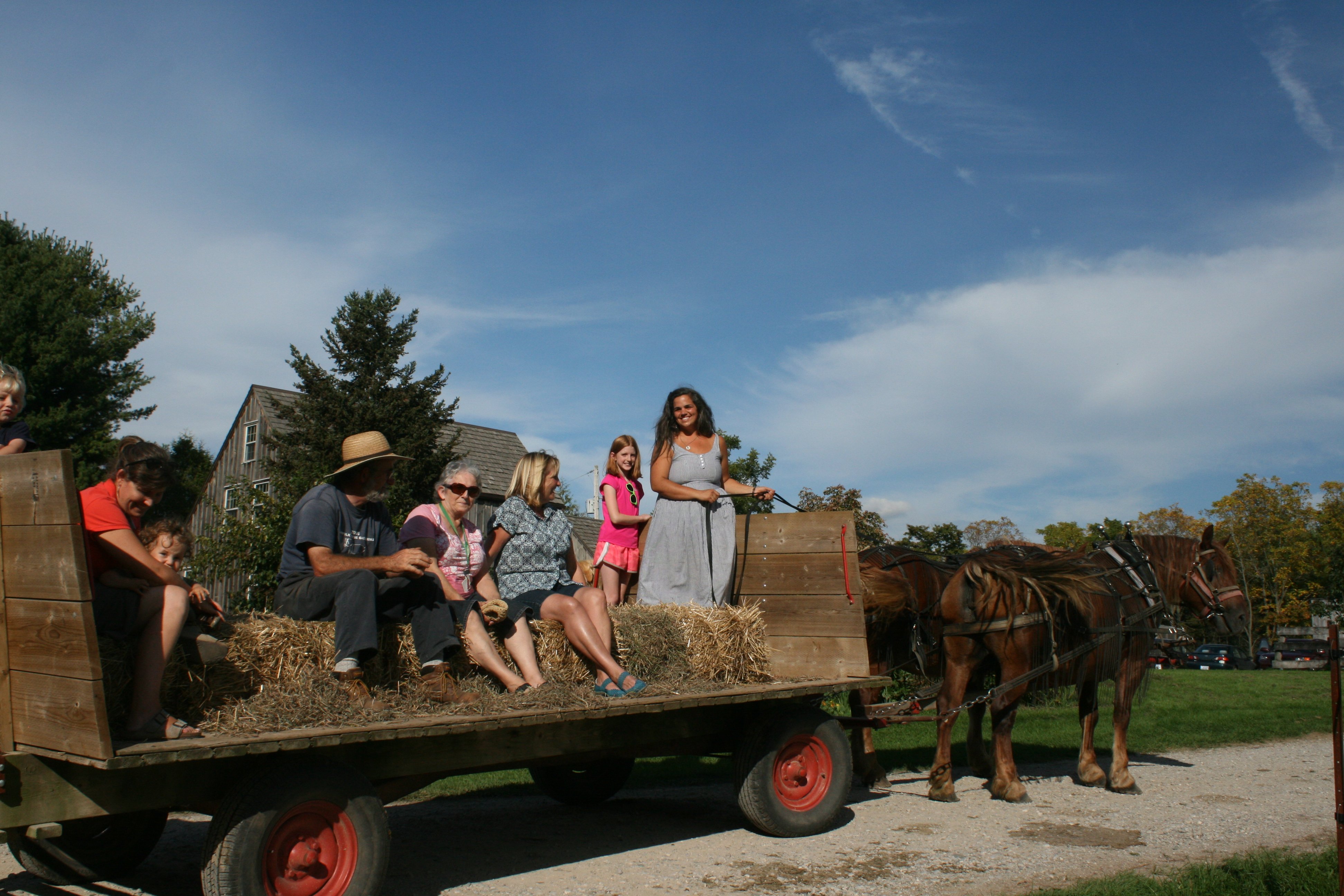
Wagon ride at the CSA Pot Luck
Obstacle Course at ASHA Annual Meeting
This Year's Crew: Brandon, Caitlin, Charlotte, Jayme, Ken and Martha
This Year’s Crew: Brandon, Caesar, Caitlin, Charlotte, Jayme, Ken and Martha

Our main season CSA is drawing to a close with our last main season pick-up coming up on Tuesday, October 7th. Charlotte has already left for the season and Brandon and Caitlin will be heading out on the 14th. Jayme is going to stay and hold the fort here while we go to the wedding of Andy, a past apprentice, in Cape Breton. We are squeezing in a trip between the end of the main season CSA and the beginning of our Fall CSA on Saturday, October 25th.

Four Horse Hitch
Four Horse Hitch

The American Suffolk Horse Association Annual Meeting, held here in September, went well despite the cold wet weather at the beginning. Everyone who attended especially enjoyed participating in and watching the obstacle course. It was great to have the breeders and directors from far and wide come and celebrate the Suffolk Horse. Ken enjoyed show casing what we have been able to do here using our Suffolk Punch horses. Our apprentices were appreciated as voices of young teamsters. The youngest teamster came from eastern Ontario, a 12 year old enthusiast, who was not intimidated by the big horses and was driving teams around.


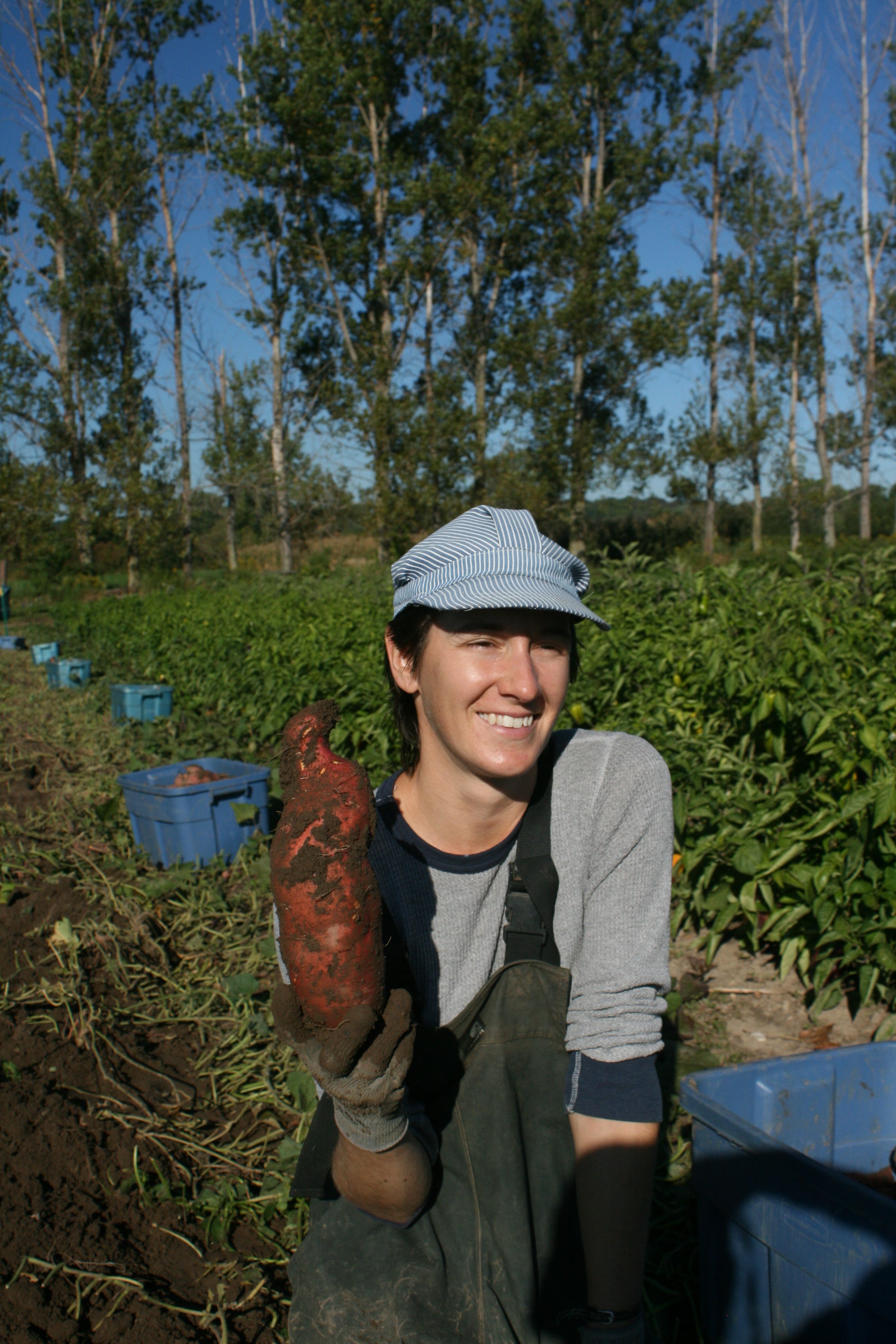
One Big Sweet Potato

Our sweet potatoes yielded very well, especially considering the cooler summer we have had. We put them in one of our hoop houses to cure as we have done in the past. It takes warmth to get the sweet potatoes to turn sweet. However, this year with our unseasonable hot weather the end of September it caused sun scald on the sweet potatoes. Needless to say I felt sick about it when I realized what had happened! As a result, we are giving them all out as quickly as possible and asking people to use them up right away. Do not put them in the fridge, as they don’t like cold. I made a delicious sweet potato pie with homemade sweet potato ice cream and a sweet potato soup. They were all excellent. 

Brandon Putting the Finishing Touches on the Portable Horse Stalls

We have decide to keep both Ned and Queen to help us and our apprentices get started next spring while Eli and Sandy continue with their training. We now have 9 horses and only 7 stalls. Brandon took on the task of building two portable horse stalls that we will put in the south lean to of the middle barn for Ned and Queen for the winter. It is made out of solid ash timber that the horses pulled out of the woods and Ken milled on our saw mill. The Emerald Ash Borer is here and we have had to harvest a lot of ash…

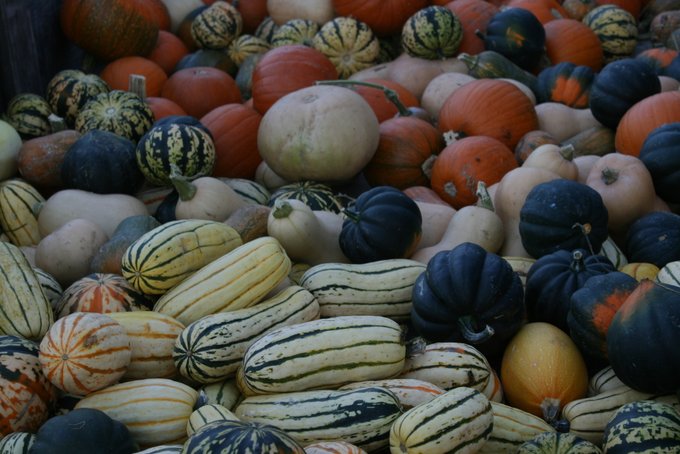
Squash
Squash

It feels like we are wrapping up the season in a hurry. Our potatoes, both regular and sweet are dug. The squash and pumpkins are gathered in and the onions are cured. Our garlic is separated ready for planting next week. The fall grain and cover corps are all planted and the hay is finally all done. We had the best haying weather of the season the end of September! We also planted the hoop houses to fall greens for the Fall CSA. Lots of loose ends are being gathered up before our apprentices leave. Now we just have some potting soil to mix up to be ready for the late winter greenhouse transplant starts.