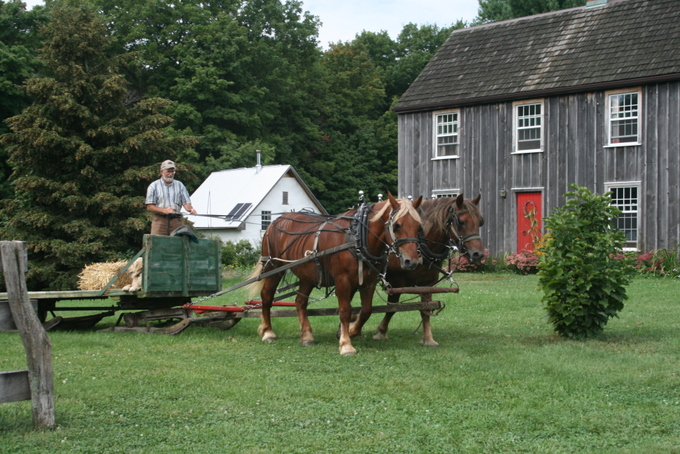
Our Suffolk Punch Draft horses are getting a much deserved rest after a very busy CSA season. Their main job these days is hauling wagons of produce up from the garden, when we are getting ready for our bi-weekly Fall CSA harvests. In the Fall CSA  we are featuring lots of greens and even some tomatoes from our hoop house and outdoor peppers! It is hard to believe that we harvested over 4 bushels of peppers on November 1st. Of course, the main stay of the Fall CSA are the storage crops and root vegetables. Rutabaga are a wonderful addition to soups and I am including a soup recipe here for our CSA customers who don’t know what to do with rutabaga, as well as casserole recipe.

RUTABAGA APPLE SOUP

1 medium rutabaga, peeled and chopped into cubes

2 Tbsp butter

1/3 cup chopped green onion

2 apples, peeled and chopped

2 cups chicken stock

1/2 cup milk or 10% cream

1/4 cup maple syrup or brown sugar

salt and pepper

Cook green onions in butter over low heat until soft ( about three minutes). Add stock, apples, and cubed rutabaga, bring to a boil and then simmer on low heat until very soft (about 35 minutes). Puree in blender or processor in batches, and return to the saucepan. Stir in milk or cream and maple syrup or brown sugar, add more stock if it is too thick. Season with salt and pepper to taste reheat and enjoy. Like many soups this will taste even better on the day after it is made.

RUTABAGA CASSEROLE – Serves 4

1 rutabaga, peeled and diced (about 4 cups)

1/2 tsp        salt

2 Tbsp        bread crumbs

1/4  cup     heavy cream

1/4 tsp       nutmeg

1/2 tsp       salt

1                 egg

1 tsp          butter, softened

1 Tbsp       butter, diced

Place the diced rutabaga in a large stainless steel saucepan.  Add salt and enough water to cover the vegetables. Bring to a boil. Lower the heat and simmer, covered, for 15 – 20 minutes or until the rutabagas are soft. Drain and puree in a food processor. In a bowl, soak the bread crumbs in the cream for a few minutes. Stir in the nutmeg, salt and eggs. Then add the pureed rutabagas and mix throughly. Butter a 9″x 9″ baking dish liberally. Transfer the rutabaga mixture to the dish and dot with the diced butter. Bake, uncovered, in a pre-heated 350 degree oven for 40 – 45 minutes until browned. Serve with pork, ham or turkey.
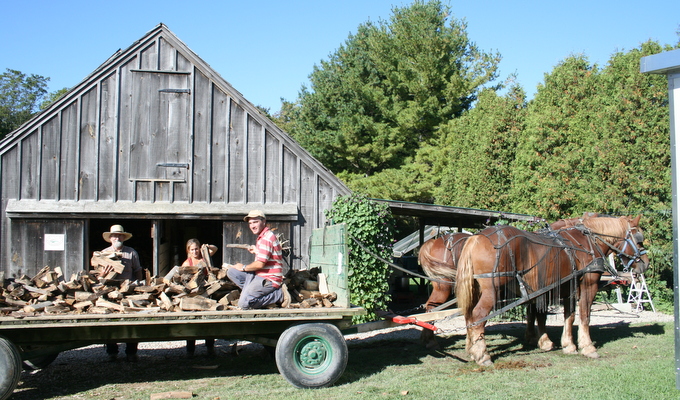


The apprenticeships on our farm end on Thanksgiving weekend. This year is unusual because our last pick-up was on Tuesday, because we started pick-ups on a Saturday. As a result, this morning, we had help from our apprentices to fill the pickup room/wood shed with firewood! This afternoon, we are lifting the gladiola bulbs to store for the winter and picking our apples! What a treat to have our own organic apples. When Ken was studying horticulture at the University of Guelph he made some extra money pruning a local apple orchard. The man who owned it had found a volunteer apple that he liked, named it “Laking” and propagated it. In the spring, Ken saved some bud wood and grafted it onto a wild apple tree in the fence row here at Orchard Hill Farm. Now, 34 years later, we have the biggest crop we have ever had. Laking are my favourite apple, crisp, juicy tart and sweet they are hard to beat!

Filling up the Woodshed


Full Woodshed
Full Woodshed


Coming up from the f Field with Apples and Ggladiola Bulbs
Coming up from the 
Field with Apples and Gladiola Bulbs


Laking Apples
Laking Apples


Our CSA end of the season potluck was held on Sunday and was well attended, despite the forecast. Fortunately, the rain held off until after the party was over. As usual, we had lots of great food to share. It is a nice way to end the season and wish farewell to our apprentice crew who have worked so hard to provide wonderful organic produce for all our CSA members.

CSA Potuck
CSA Potuck
Happy Thanksgiving
Happy Thanksgiving

Final Potato Harvest of the Season

It’s hard to believe that we are already at the end of the Spring/Summer CSA season! Yesterday, it felt more like July with the hot dry weather. I guess we are making up for the cool spring. Our squash harvest has been more drawn out than ever before, while we wait for some of the squash to ripen in the field. It got off to a slow start in the spring and has needed the warm sunny weather of the last week to catch up. We are planning on bringing all the remaining squash up today. Yesterday, we finished digging the last six rows of potatoes and the field has been disced. The popcorn and ornamental corn was all picked too. Gradually, we are finishing up all the big fall harvest jobs and then we have the garlic to plant and the winter fire wood to bring up to the woodshed. Our pick-up room doubles as our wood shed. Once the main season CSA is finished we fill it up with firewood. The greenhouse is used as our Fall CSA pick-up room, because it doesn’t freeze. The produce for the Fall CSA looks great and we are looking forward to abundant harvests of stored and fresh picked produce throughout the fall. Today, we will plant  a couple of the hoop houses for fresh baby greens to add to the in November pick-ups. I enjoy the challenge of extending the season and the fresh picked fall greens have such full flavour they are a big hit. We still have a few spots left in our Fall CSA.

We are accepting applications for the 2014 Spring/Fall CSA  – Click the following link: Orchard Hill Farm Application

Ken and I had a wonderful trip to Vermont and saw about 30 Suffolk Punch Draft horses on our travels. Considering it is a rare breed that was quite something. We also had fun visiting Jolianne and Jonathan, two of our past apprentices and seeing their CSA farm operation Ferme Melilot in Quebec. (www.fermemelilot.com). It’s amazing how quickly they have advanced considering how long it took us to find our way forward with our CSA farming. It is a tribute to the individuals, but also demonstrates the great benefit there is in farm apprenticeships. On route we stopped off at Prince Edward County and I picked up a cookbook with some seasonal recipes that looked good. Here are a couple adapted from The Miller’s House Cookbook by Robert Simpson:

GRATED RUTABAGA CAKES

1 lb rutabaga, peeled

1/2 lb baking potatoes

1/3 cup all-purpose flour

2 eggs, lightly beaten

1 egg yolk

1/2 cup thinly sliced green onion or cooking onion

1/2 cup vegetable oil

Coarsely grate the rutabaga and potatoes. In a kitchen towel squeeze the grated vegetables to extract the excess liquid. In a bowl toss the grated vegetables with the flour, stir in the whole eggs, egg yolk, onion and season the mixture with salt and pepper.

In a large skillet heat 2 tbsp of the oil over moderate heat until it is hot but not smoking and in it fry rounded tablespoons of the mixture in batches, flattening the cakes with a slotted spatula, for 1-3 minutes on each side, or until they are golden and tender. Transfer the cakes as they are fried to a warm heat proof platter, and adding more oil to the skillet as needed. If necessary,reheat the cakes before serving.

yield: about 20 cakes

SWEET POTATO SOUP

1/2 cup onion, finely chopped

1/2 cup leeks, finely chopped ( add 1 cup onion if you don’t have leeks)

1 large cloves garlic, minced

2 large carrots, sliced thin

2 tbsp  unsalted butter

1/2 lb sweet potato (2 medium size)

1 baking potato

2 1/2  –  3 cups chicken broth

1/2 cup white wine

3/4 cup water

Cook the onion, leeks, garlic and carrots in the butter over moderate heat, stirring, until the vegetables are soft. Add the sweet potatoes, baking potato, broth, wine and water and simmer the mixture covered for 15-20 minutes or until vegetables are very tender.

In blender puree the mixture until it is very smooth.  Add additional broth to thin if necessary. Season with salt and pepper to taste.

serves 4  to 5

Digging Sweet Potatoes with our Horse Drawn Potato Digger

We tried the horse drawn potato digger to dig our sweet potatoes and it worked like a charm! The sweet potatoes are now curing in one of our hoop houses. They are different than any other vegetable because they need heat to get sweet instead of cold.

We are heading into the last few weeks of the 2013 Main Season CSA and I wanted to make sure everyone knew the last pick-up days and the date of the CSA Pot Luck:
Last Saturday Pick-up: October 5
Last Tuesday  Pick-up: October 8
 
CSA End of Season Pot Luck: Sunday, October 6 – (2:00-4:00 p.m.) Bring food to share, plates, cutlery and lawn chairs.  We will have horse drawn rides after the food.
After a backward cool spring it has turned into a bountiful year for the garden with record harvests of many crops. In our CSA, you as members, share the risk with us, the flip side is us sharing the bounty with you – so help yourselves to the “extras”.
Pick-your-own fall Raspberries will continue until the end of the season or until we have a killing freeze. We will be harvesting the first of the fall carrots on Saturday and they are the sweetest of the season. Yet to come are celeriac, rutabaga, parsnip, brussels sprouts, chinese cabbage and winter radish along with the full complement of squash and pumpkin. I have done a back search of some of the great recipes on our blog and linked to them for you to refer to. I think it is a soup time of year. When we give celeriac don’t be afraid of it’s ugly appearance, because it is truly lovely in soup. The Potato and Leek Soup #1 recipe also gives great directions for cleaning leeks. When the rutabaga and parsnip appear I always make Winter Warmer Soup. Even if you aren’t a fan of strong flavoured root vegetables, in this recipe they all blend together deliciously with a hint of ginger and lemon. These soups are always better the second day, after the flavours have had a chance to blend, so you can make them ahead and enjoy them later when you are too busy to cook! Pumpkin Honey is a lovely spread on pumpkin muffins. It has the consistency of apple butter with lemon/pumpkin goodness. Pumpkin Custard is one of Ken’s favourites. It is like a good pumpkin pie without the soggy crust. Keep in mind that any pumpkin recipe can be made with squash.  Kale Chips with Cashews are deluxe and also call for a red pepper. You can freeze peppers and use them in the winter in this recipe. No need to blanch them just take out the seeds and freeze. Chocolate Beet Cake is rich and moist and is also better the second day. I love the Roasted Beet – Arugula Salad. Really, I just love fall with the golden sunlight, harvesting the fruits of our labours and all the wonderful full flavours of the roots and greens. When the cold weather comes the starch in many plants turns to sugar and makes them deliciously sweet.
Ken and I are travelling to Vermont next week to attend 2013 Draft Animal Power Field Days, where Ken is giving a workshop on Horse Powered CSA. The apprentices will be running the show here at the farm. If you need to contact them please phone: 519-775-2670 for the pick-ups of September 24, 28 and October 1.
We have only 10 shares left in the 2013 Fall CSA. If any of you want to continue enjoying the rich tastes of the fall produce, and haven’t already signed up, now is your chance!

Cabbage in the CSA pick-up Room

We have been busy harvesting. The onions are all out of the field and curing in two of our hoop houses. We dug another eight rows of potatoes last week and hope to finish the job next week. The horse drawn potato digger is working well and the yield of potatoes is good this season. We have had a bumper crop of peppers. They were a bit slow to ripen, but now are pouring in. We have missed frost on two nights so far and hope that it holds off for a while so we can keep on picking those beautiful red, yellow and orange peppers! We need to harvest the sweet potatoes before frost as well. The squash vines are starting to dye back. It is fun to see all the squash and pumpkins emerge, that were hiding under all the foliage. The outdoor tomatoes are finished now, but we will keep on picking the hoop house tomatoes.  The hoop house cucumbers have been removed to make room for a planting of spinach for the Fall CSA. Our haying is finally over for this season. We put the last of the second cut hay in the barn on Tuesday. It feels like the main season is wrapping up quickly!

Lots of Sweet Peppers

Ken has had time to start training two of our Suffolk Punch horses. Sandy and Eli are both coming along well. I look forward to having a barn full of trained horses. Caesar is always happy to ride along on the sleigh during training sessions. The sleigh in the summer is a hard pull and helps keep the new horse under control. It is also a good way to get them used to the sound of something behind them, especially when the sleigh runners are on the gravel lane-way!

Ken and Caesar Training Sandy (on left)
Sandy with her mother Suzie


Once in a while the old tongues on our horse drawn equipment break and need replacing. Ken has cut out some blanks with his saw mill that can be used to make new ones. Bill has had the job of making two new tongues this week.

Bill Making Two New Tongues


We have had some recipes forwarded to us by CSA members and are happy to pass them along!

From Vicci Coughlin:

I was happy to see the baby zucchini today and do this simple pasta recipe again, thought I’d pass it along.  It is from an early Jamie Oliver cookbook.

Baby Zucchini Pasta

This is a light, fragrant and very quickly made pasta dish using very firm baby zucchini, which hardly needs to be cooked at all.  The idea is to slice them as thinly as possible in an irregular fashion.  The big fat zucchini that are fluffy inside, won’t do for this recipe.

Serves 4

1/4 cup olive oil

1 clove finely chopped garlic

8-10 small very firm zucchini

juice of 1 lemon

1 good handful of fresh basil leaves, torn

1 pound of pasta

salt and freshly ground black pepper

3 1/2 oz. Parmesan cheese, grated.

Put the olive oil and garlic into a thick bottomed pan and set over medium-high heat and fry for about 30 seconds without colouring, then add your baby zucchini and toss gently.  After about 2 minutes squeeze in the juice of the lemon, add the basil and cook a little longer.

Meanwhile cook the past in boiling salted water until al dente.  Toss it with the zucchini to mix the flavours, season to taste and add the Parmesan to round all the flavours together- you may need a little extra olive oil to loosen it.  Serve with some torn basil and a sprinkling of Parmesan on top.

From Lisa Koivu:

Macaroni and Cheese
One large red onion
4 tbsp butter
4 tbsp flour
1 “pail” spinach
1 box whole wheat rotini or fusili
3 c milk
3 c grated cheddar cheese
To the cheddar cheese, add 2 tbsp flour and mix together. Set aside.
Bring water to boil and cook pasta according to directions.
Chop spinach.
During last 3 minutes of cooking, add spinach to the pot. Drain well once time has finished.
In a 8 c microwave dish, put the butter and the onion, finely chopped. Microwave on high for 5 minutes.
Whisk in 2 tbsp of flour to make a “roux”.
Immediately add milk.
Microwave milk mixture on high for five minutes. Then whisk. Continue to cook a minute at a time, until mixture has thickened (you want to watch it so it doesn’t boil over).
Add the cheese and flour mixture.
Combine the cheese mixture and the pasta in a large white casserole dish. Bake at 350 for 30 minutes. Optional: Add cubed cooked chicken or ham before baking.

Homemade Pasta Sauce
1 large red onion, chopped
1 clove garlic, chopped finely or put through a press
3 quarts tomatoes, peeled and chopped.
1 sweet pepper
2 tbsp olive oil.
1 eggplant, or any summer squash, peeled and diced
3 basil leaves, chopped
1 pound cooked hamburg or sausage (optional)
In a large 5 quart pot, heat olive oil.
Add onions and garlic and pepper
Sautee for about 5 minutes or until golden, on medium-hi heat.
Add tomatoes and basil and salt to taste – at least one tsp.
Cover and simmer for 20 minutes, or until tomatoes are very mushy.
Cool for about 20 minutes.
Put the entire mixture through a food processor to puree.
After pureeing, add the hamburger if desired.
You could probably hide a lot of other veggies in there, depending on what’s available in the garden.

Crock Pot Stew
1 lb stewing beef, cut into bite-sized pieces and tossed with 2 tbsp flour to coat.
Savory and marjoram, as available
2 tsp salt or seasoning salt
3 large tomatoes, peeled and chopped
1 large onion, chopped
2 cloves garlic, pressed or chopped
Amazing veggies from Orchard Hill – chopped into bite sized pieces. Could include, but not limited to, beans, carrots, summer squash, peppers, kale, chard….
Put the entire mixture in the crock pot and cook on low for 12 hours or high for 6 hours. If possible, stir well for the first hour to prevent flour from sticking to the bottom. Tastes better the second day.
Note: Sometimes I use an envelope of Lipton Onion Soup Mix when I make this in the winter, but I try not to resort to that with CSA veggies.


2013 Potatos
2013 Potatoes

The season is unfolding and we are enjoying harvesting many of the crops that we have nurtured along all season. Our potato crop is very good this year. After several years of preparation all our planning is paying off. A number of years ago we decided to grow our high fertility crops in a rotation with each other so that we could bump up the fertility and then take advantage of it the next season as well. The rotation is potato – squash – sweet corn followed by one year of  green manure cover crops to replenish the soil and smother weeds before we begin the rotation again. Initially, we planted the blocks beside each other only to find that we had a major potato and cucumber beetle problem. The insects wintered over in the soil and just moved “next door” for a feast the following season. To solve the problem we kept our rotation, but moved the blocks about 1 kilometre from each other. This year we had no potato beetles in the potatoes and the cover crops that were planted the year before, as well as Ken’s cultivation with the horses, resulted in no hand weeding or hoeing in the field until last week when we did a quick once over to pull  a few weeds that had escaped!

Hoop House Tomatoes, Beans, Eggplant and Cauliflower

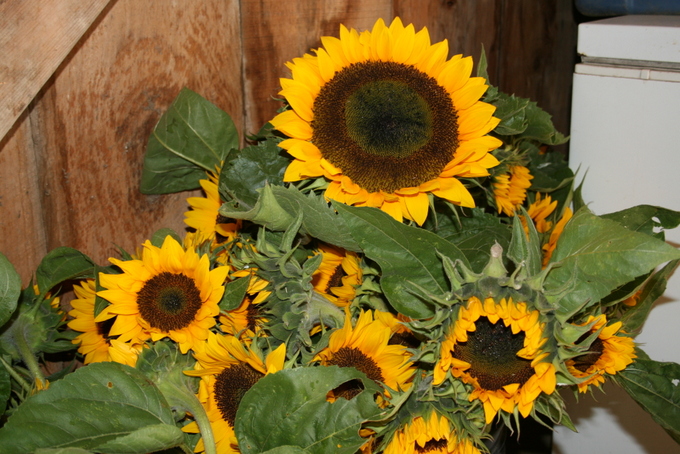
The out door tomatoes and eggplant are slow to ripen with our cooler summer, however hopefully the warm weather this week will bring them along. We had a nice crop of sunflowers for bouquets this year and enjoyed their cheerful presence in the pick-up room.

 Sunflowers for our CSA

Sunflowers for our CSA
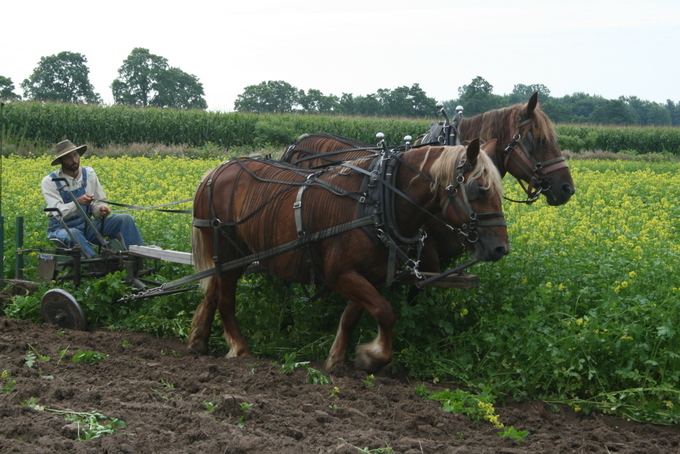
Sam Ploughing Down Mustard Cover Crop with Suffolk Punch Horses

Each year our apprentices have a field to manage. They take soil samples, study the results to decide how to prepare the soil for the crop we are planning to grow and do all the field work that is needed. This year Sam’s field is the area that will be our main garden in 2014. All season he has been working getting the field ready. He ploughed down a hay cover crop, planted a cover crop of mustard, ploughed in the mustard, cultivated, spread the compost, cultivated the ground again and planted it to buckwheat, all using our Suffolk Punch horses. The whole process develops his teamster skills and helps to instil an awareness of the importance of preparing the soil for crops as the foundation of organic agriculture.

Horse Drawn Sprayer in Action

This season we invested in a horse drawn sprayer. Our garden has out grown the back pack sprayer, that we used in the past. Sprayers in themselves are not bad it is the materials that are used in them that determines whether they can have detrimental effects on the farmer , consumer and the environment. Some micronutrients like boron and molybdenum are best applied by spraying as it lets you distribute very small quantities evenly over the soil. We also use it for applying foliar sprays of fish emulsion. There are also organically approved botanical and biological sprays like pyrethrum, bacillus subtilus and spinosad that we use for some insect and fungal pests.   Our draft horses are getting used to the noise of the motor that runs the sprayer as they walk along. However, we have to be careful which horses we use when we spray fish emulsion…if they aren’t used to it one whiff and it can be the start of a run away! Spraying a friendly bacteria on our summer squash has resulted in the friendly bacteria out competing the downy mildew that in the past has all but killed off our summer squash by this time of year. As a result, we have had a bumper crop and are starting to pick some of them when they are 3-4 inches long for “baby squash” to try and reduce the volume!

Bill still has some frozen chickens for sale and our CSA member Deb Atkinson has shared a Chicken Curry recipe that her family enjoys that uses cabbage. Our next batch of cabbage and peppers will be ready soon to go with the recipe!

Crockpot Chicken Curry

Ingredients:

3 Chicken Breasts

2 cans coconut milk

Red Curry paste (I got it at Superstore)

1 small yellow onion

1 green pepper

1 red pepper

½ head of cabbage

Put all the ingredients in the crock pot and stir (put all the stuff in the crockpot the night before as my

Mornings are busy and all I had to do was take it out of the fridge and plug it in. Turn on crockpot to

Low heat if you will be gone all day or high if you want it done earlier for lunch.

ENJOY!!! My kids really liked it, as it wasn’t spicy but a nice mild sweet flavour.

Cold Cucumber Soup from CSA member Colleen Burns
A great summer soup. MAKES 8 SERVINGS
3 Tbsp        butter
1 cup          chopped onion
4                 large garlic cloves, minced
3 cups        chicken broth or vegetable broth
4 cups         seeded, diced, unpeeled cucumber (2 medium)
1 cup          chopped swiss chard or spinach
1 cup          sliced, peeled potatoes
1 Tbsp        fresh lemon juice
1/2 tsp        salt or more to taste
1/4 tsp        freshly ground pepper
tsp each      basil & dill (optional)
1 cup          table cream
Heat the butter in large saucepan & saute onions & garlic until soft. (don’t let brown). Add broth, cucumber, swiss chard or spinach, potato, lemon juice, salt & pepper. Simmer, covered times 10 minutes till potato is soft.
Either put batches of the mixture thru the blender or food processor to puree. Transfer mixture to a bowl. Add more spices if desired. Let cool. Add cream and serve in chilled bowls.
Enjoy!
EFO Field Day at Orchard Hill Farm Horse Drawn Cultivator in Action
EFO Field Day at Orchard Hill Farm
Horse Drawn Cultivator in Action
Raking Wheat Straw
Raking Wheat Straw

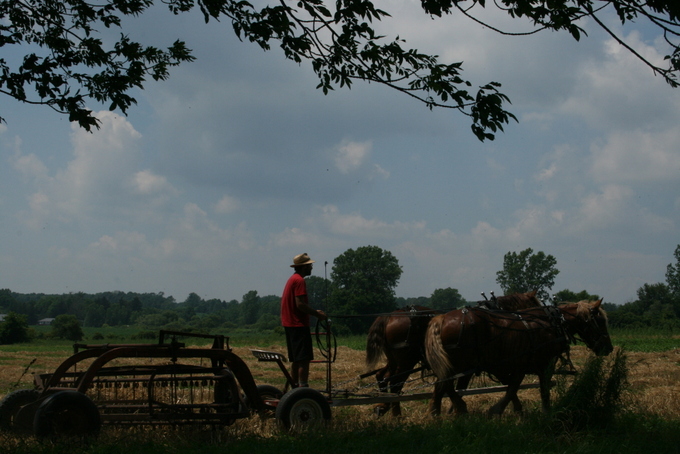
Every week continues to be filled up with events here at Orchard Hill Farm. On Wednesday, July 17th we had a Ecological Farmers of Ontario Field Day to demonstrate how Draft Horses can be successfully used for a small vegetable operation. It was an interesting day for participants despite the intense heat! Bill raked the wheat straw at the same time and we were able to get it into the barn the next day without any rain on it! The apprentices enjoyed throwing around straw after the heavier hay of the week before.

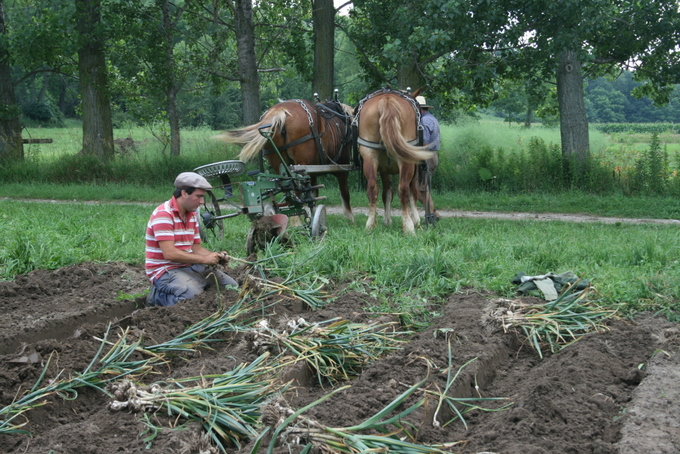
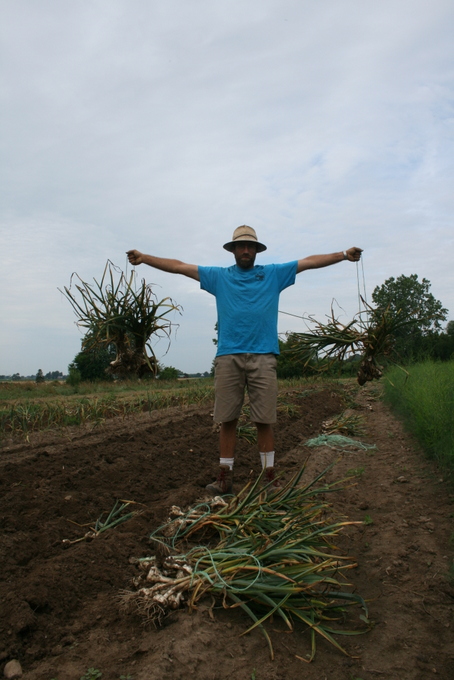
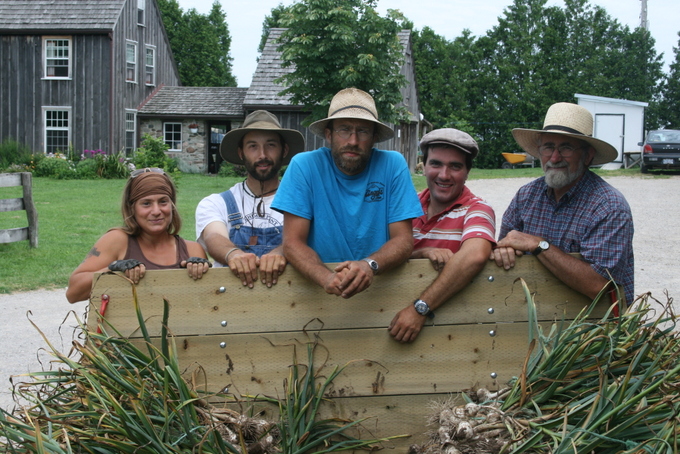
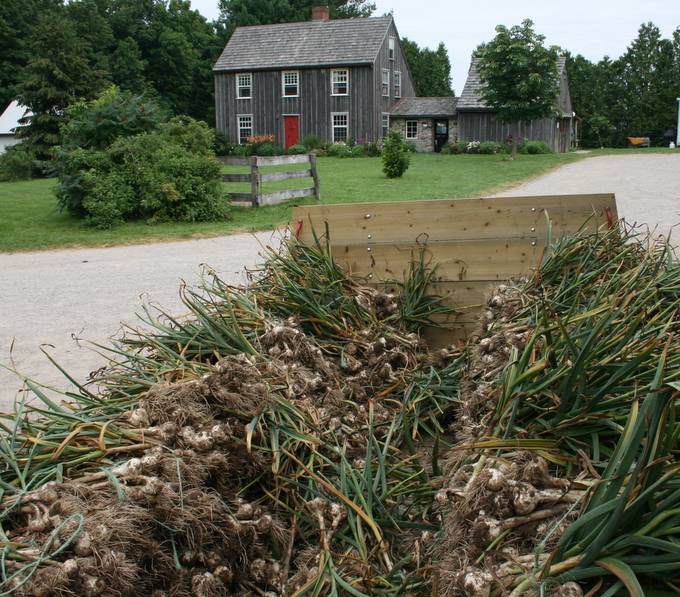
On Monday, we harvested our 2013 garlic crop using our Suffolk Punch horses to plough out the garlic with the riding plough. It worked like a charm and we had all nine – 375 foot rows ploughed out, tied together in bundles and hung up in the barn to dry in three hours. That is a record! Using the riding plough was a great improvement. Here are some pictures of the event!
Ploughing out Garlic with Sufflok Punch Horses
Ploughing out Garlic with Suffolk Punch Horses

IMG_9482

Bill Lifting Garlic Weights

Stephanie Tying Garlic Bundles

Sam Harvesting Garlic

Garlic Harvesters, Stephanie, Sam, Bill Jean Francois, Ken

IMG_9483

CRAFT DAY at Orchard Hill Farm

Yesterday we had about 50 South Western Ontario CRAFT (Collaborative Regional Alliance for Farmer Training) interns from other organic farms in Southwestern Ontario come to our farm. The  day included an extensive tour of the farm, pot-luck lunch, a soils workshop and demonstration of various horse drawn implements in the main garden. We enjoyed hosting this group of fine young  people who have given the season over to learning about organic farming on various farms in our region.

CSA member Marianne Campbell has shared a couple of recipes that she has enjoyed. With the anticipation of Zucchini coming and for those of you who still have fennel in the fridge and aren’t quite sure what to do with it…keep in mind that any summer squash can be substituted for zucchini.

Zucchini Relish

 5 cups ground zucchini with peel

2 cups ground onion

2½ tbsp. coarse (pickling) salt

1 small green pepper, seeded and ground

1 small red pepper, seeded and ground

1¼ cups white vinegar

2½ cups granulated sugar

1 tbsp. celery seed

2 tsp. cornstarch

1½ tsp. dry mustard powder

1½ tsp. turmeric

1½ tsp. nutmeg

¼ tsp. pepper

Combine zucchini, onion and salt in large bowl. Cover and let stand overnight on counter. Drain. Rinse in cold water. Drain. Turn into large pot.

Add remaining ingredients. Heat on medium-high, stirring often, until it boils. Boil, uncovered, for 30 minutes, stirring occasionally. Pour into hot sterilized jars to within ¼ inch of top. Seal. Makes 5 to 6 half pint jars.

Source: Company’s Coming “Preserves” by Jean Paré


Shrimp and Couscous Salad with Fennel

1 ¼ cup whole-wheat couscous

1 ½ cup boiling chicken broth

3 tbsp. olive oil

Zest and juice of 1 large orange

2 tbsp. lemon juice

1 tsp. salt

½ tsp. red pepper flakes

12 large shrimp

½ fennel bulb, diced

½ sweet red pepper, diced

¼ cup toasted slivered almonds

½ cup fennel fronds

Place the couscous in a medium glass or stainless bowl. Pour the boiling chicken broth over top. Stir to combine. Cover with a lid or plastic wrap and let sit for 5 minutes. Fluff with a fork and let cool.

In a medium glass blow, combine the olive oil, orange zest, orange juice, lemon juice, salt and red pepper flakes. Whisk to combine. Add the shrimp and set aside.

When the couscous is cool, add the fennel and red pepper.

Add the dressing with the shrimp.  Add the almonds and fennel fronds. Toss well.

Season with salt and pepper, if necessary, and serve.

(Serves 4) Source: London Free Press


With the warm weather comes basil and garlic scapes. Here is a recipe to use both. We gave a box today in the pick-up with the last of the garlic scapes.
PESTO
In food processor puree:

1 quart of basil leaves loosely packed and 2-3 garlic scapes
1/2 cup olive oil
1/3 cup ground almonds
1/2 teaspoon salt (optional)
1 teaspoon lemon juice (or more to taste)
1/2 teaspoon black pepper (or to taste)

We have a had a busy month visiting with our daughter, Ellen and son-in-law, Aaron with granddaughter, Della who came for her first birthday. Della learned to walk while she was at the farm and enjoyed all the animals and strawberries!IMG_9368

Making Garlic Scape Pickles
Ploughng 2014 Garden Area